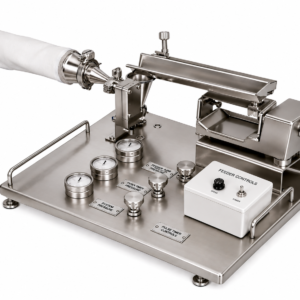
ADVANTAGES
- Ultra-fine grinding without grinding media
- Pilot-scale and production-scale configurations
- Stainless steel construction available
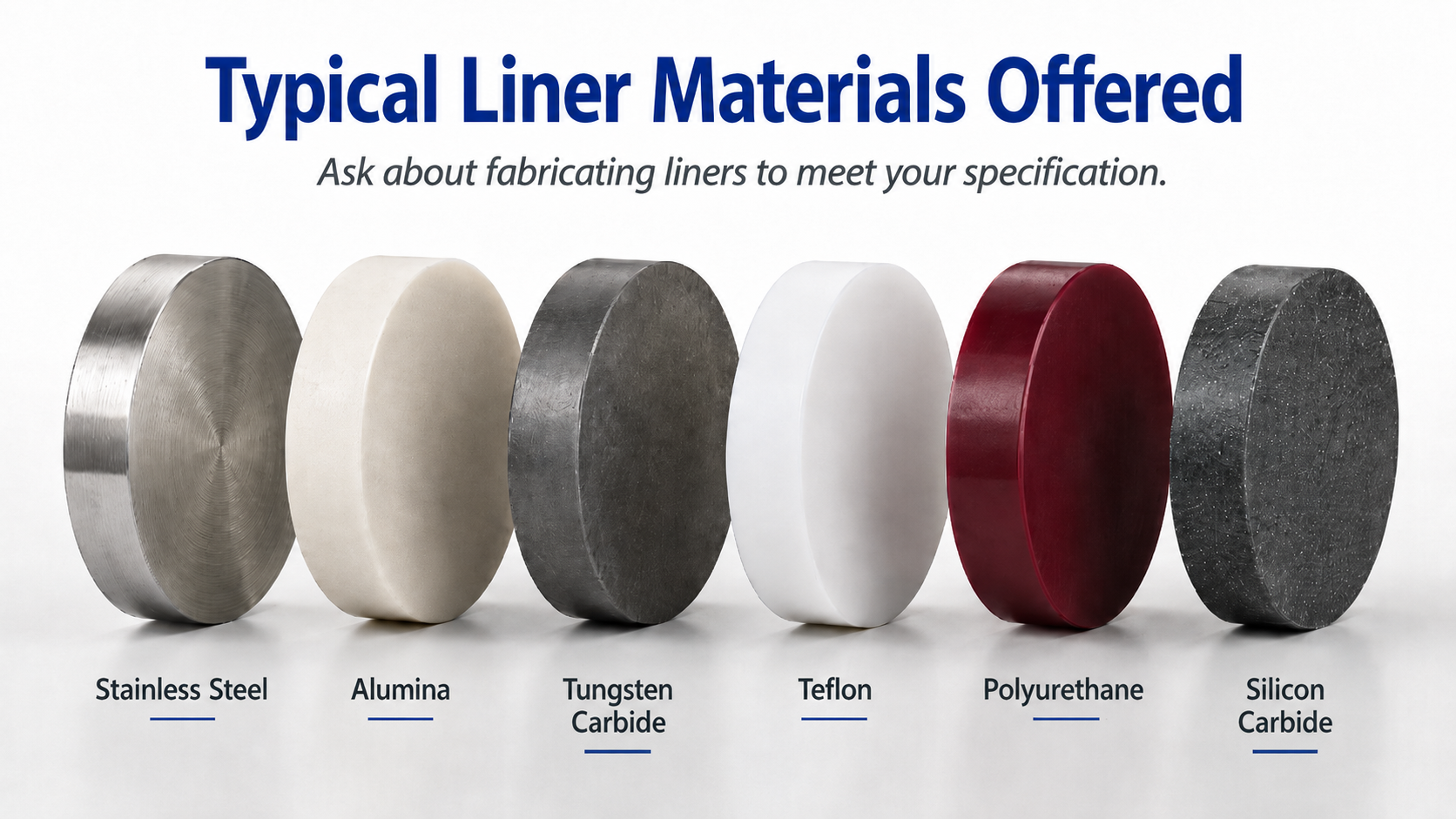
- Abrasion-resistant liner options
- Sanitary and easy-clean designs
- Multiple feeding and collection options
- HEPA filtration and dust collection options
- Designed for process scale-up and production reliability
FUNCTIONAL PRINCIPAL
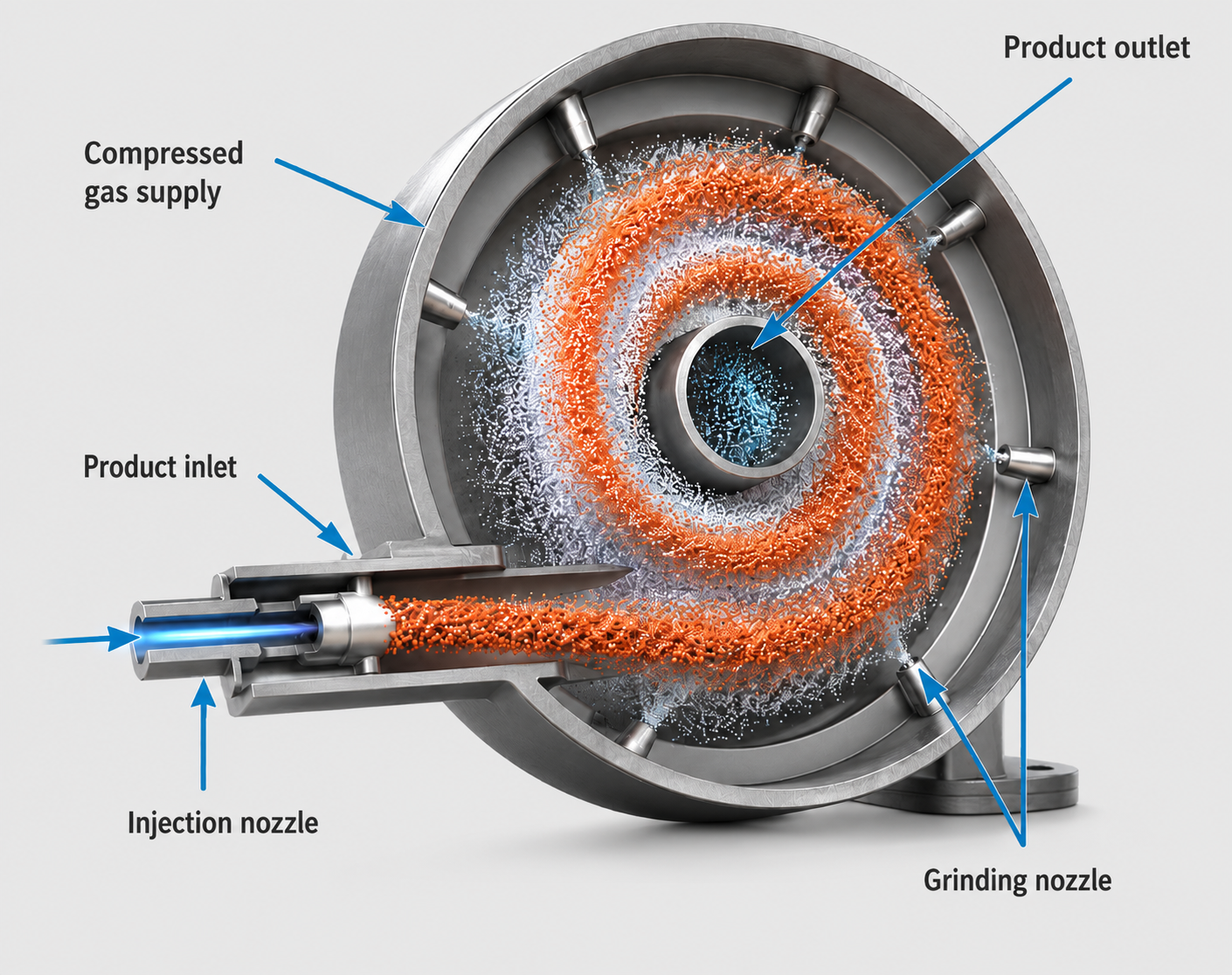
Material is introduced into the jet mill through a controlled feeding system. Compressed air or gas is directed through precisely arranged nozzles, accelerating particles inside the grinding chamber.
What is Static Classification?
As particles collide with each other at high velocity, they fracture into smaller particles. Fine particles are carried out of the mill and collected, while larger particles continue circulating until reduced to the target size range.
What is Active Classification?
Active jet milling classification uses a high-speed classifying wheel to precisely control the final particle size during the milling process. As particles are reduced in the grinding chamber, they are carried by the process gas toward the rotating classifier.
Fine particles that meet the target size pass through the wheel and exit the mill, while larger particles are rejected by the centrifugal force of the classifier and returned to the grinding zone for further size reduction. This active classification method provides tighter control over particle size distribution and allows the cut point to be adjusted by changing the classifier wheel speed.
In comparison, static classification relies on fixed geometry and airflow patterns within the milling chamber to separate fine particles from coarse particles, without a moving classifier. Static classification is simpler and has fewer mechanical components, while active classification offers greater precision, flexibility, and control for applications requiring a narrow and consistent particle size distribution.

PILOT AND PRODUCTION SCALE JET MILLS
Jet-O-Mizer (Static Classification)
The JET-O-MIZER jet mill has been developed with many distinct design features to consume less power, provide a greater range of throughput (1 to 12,000 lb/hr) and ensure exceptional finished product quality.
Thorough application engineering allows determination of the ideal operational conditions for your process. Specific raw material characteristics and production requirements are integrated into a complete JET-O-MIZER system.
Micro Jet (Static Classification)
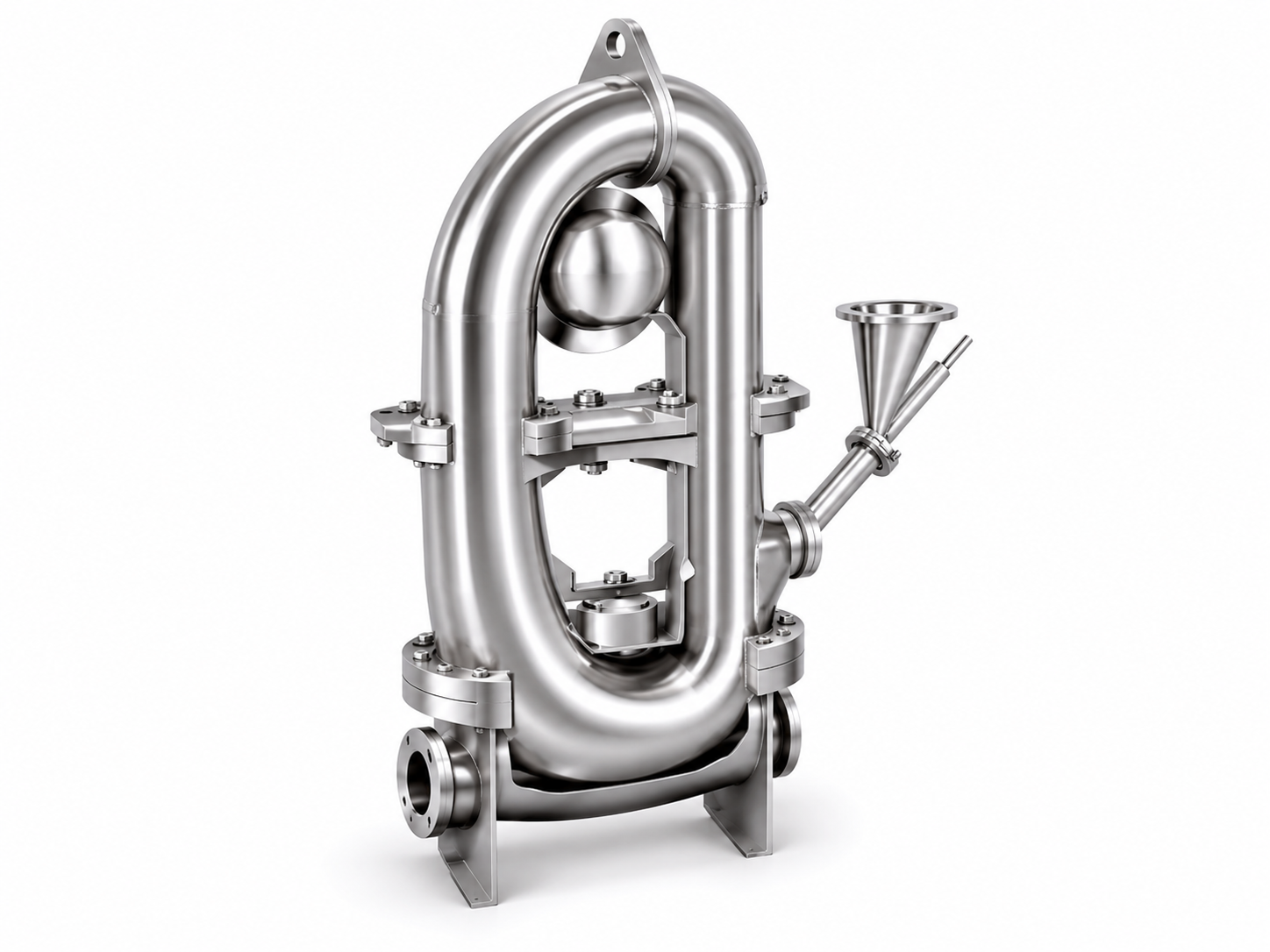
Unsurpassed Quality and Productivity in Ultra-Fine (0.5 – 45 Micron) Grinding Applications The MICRO-JET System delivers unsurpassed efficiency and effectiveness in the ultra-fine grinding and classification of a wide range and variety of materials. Each system is custom-engineered to meet a broad range of grinding applications. The design of the Micro-Jet jet mill makes operation simple and keeps production costs down. Systems are engineered for laboratory, pilot and full-scale production from 1 to 10,000 lb/hr.

Roto-Jet (Active Classification)
The ROTO-JET mill produces a finely ground product and affords you the most advanced and precise control of the particle size distribution. Efficient compressed air usage and total system automation ensure that the highest quality product is manufactured.
We bring a wealth of technical and engineering expertise to our manufacturing process and closely involve the customer in every project. The result is a custom engineered and cost-effective grinding circuit operating with the most advanced technology in the size reduction industry.

Thermajet
Exceptionally efficient flash drying and de-agglomeration in a single system. Flash Dryers, Slurry Drying, Calcining & De-agglomeration Applications for Heat Sensitive Products. The ThermaJetTM system produces a discrete, dry product from any raw feed, including wet powder, slurry, centrifuge, or filter cake. Automated system operation and high thermal transfer maximize product quality and drying efficiency.
- Provides simultaneous deagglomeration and drying to produce discrete particles
- Processes heat-sensitive products without thermal degradation
- Ensures the most efficient heat transfer with an increased surface area
- Closed-Loop systems for solvent removal and recovery
- Low-maintenance and compact design
- Has inlet temperatures from 200-1300° F
- Provides calcining application that occurs at less than 1300° F
- Direct and Indirect heating available

RENTAL OPTIONS AVAILABLE
Renting gives your team the ability to test particle size reduction directly in your own laboratory, using your actual material, process conditions, and analytical methods. This allows you to evaluate performance, confirm target particle size, study product recovery, and determine whether jet milling is the right solution before making a capital equipment purchase.
Rental units are especially useful for short to long term projects, feasibility studies, process development, and customer trials where flexibility and speed are important. By testing in-house, your scientists and engineers can better understand how the material feeds, mills, and collects, while reducing project risk and helping justify the correct equipment configuration for future production needs.