ADVANTAGES
- No heat generated
- Ultra-fine grinding
- No grinding media required
- Stainless steel construction
- Configurable collection and filtration options
- Suitable for small-batch testing and product development
- Scalable process data for larger jet milling systems
- Uses compressed air or inert gas
- GMP Compliant for Pharmaceutical or Food Use.
FUNCTIONAL PRINCIPAL
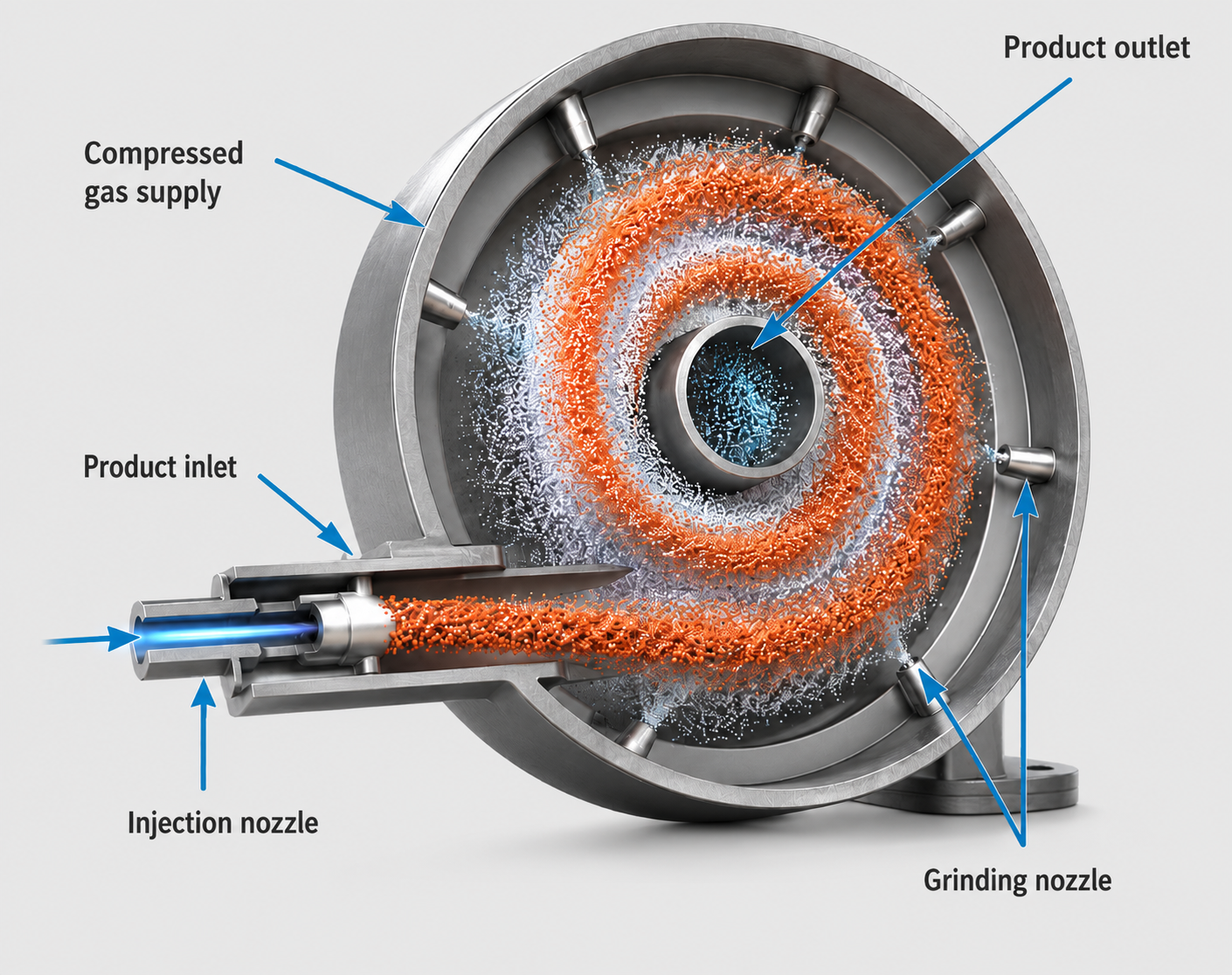
Material is introduced into the jet mill through a controlled feeding system. Compressed air or gas is directed through precisely arranged nozzles, accelerating particles inside the grinding chamber.
As particles collide with each other at high velocity, they fracture into smaller particles. Fine particles are carried out of the mill and collected, while larger particles continue circulating until reduced to the target size range.
Lab Scale Models
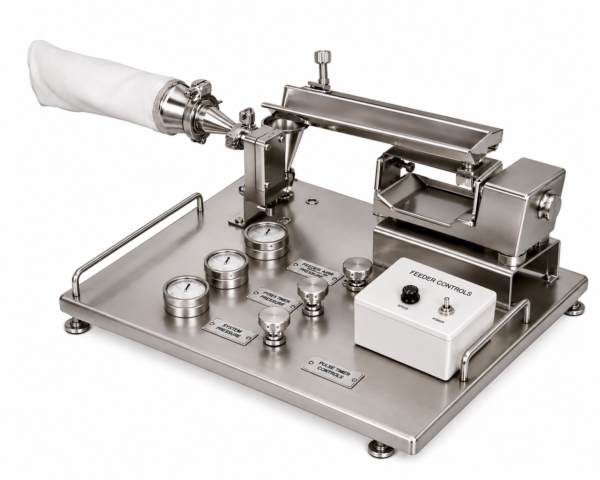
Model 00 Jet Mill
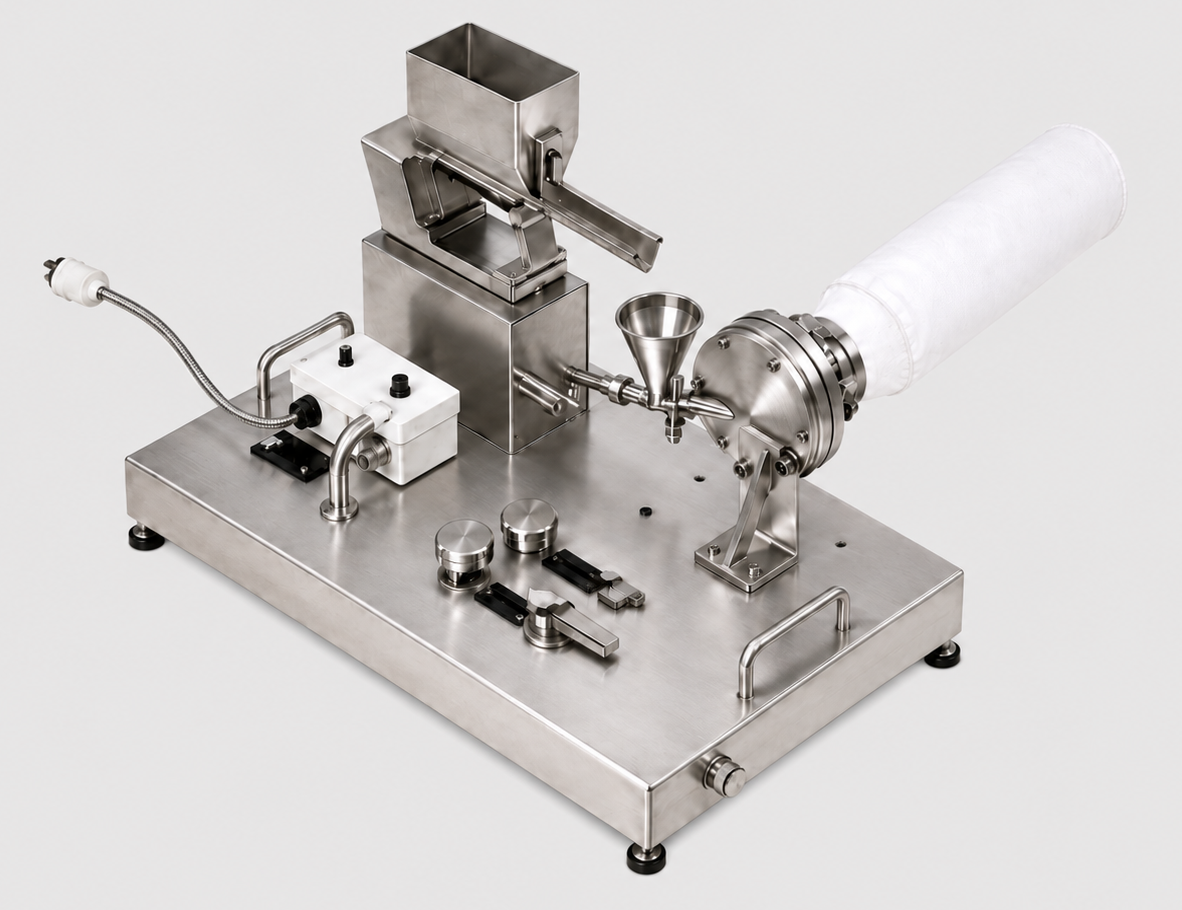
The Model 00 is a compact 5 CFM jet mill designed for small-scale powder processing and laboratory evaluation.
The system is constructed on a stainless steel tray that houses the pressure controls and vibratory feeder control, creating a clean, organized benchtop milling platform. A vibratory feeder provides controlled material introduction into the mill, while the standard 2″ x 9″ filter sleeve collects the reduced powders.
Key Features:
- 1 gram to 500 grams per hour
- 500.0 nm to 20.0 µm particles
- Integrated pressure controls
- Vibratory feeder control
- Included vibratory feeder
- Standard 2″ x 9″ filter sleeve
- Compact lab-scale footprint
- Ideal for small samples and feasibility studies
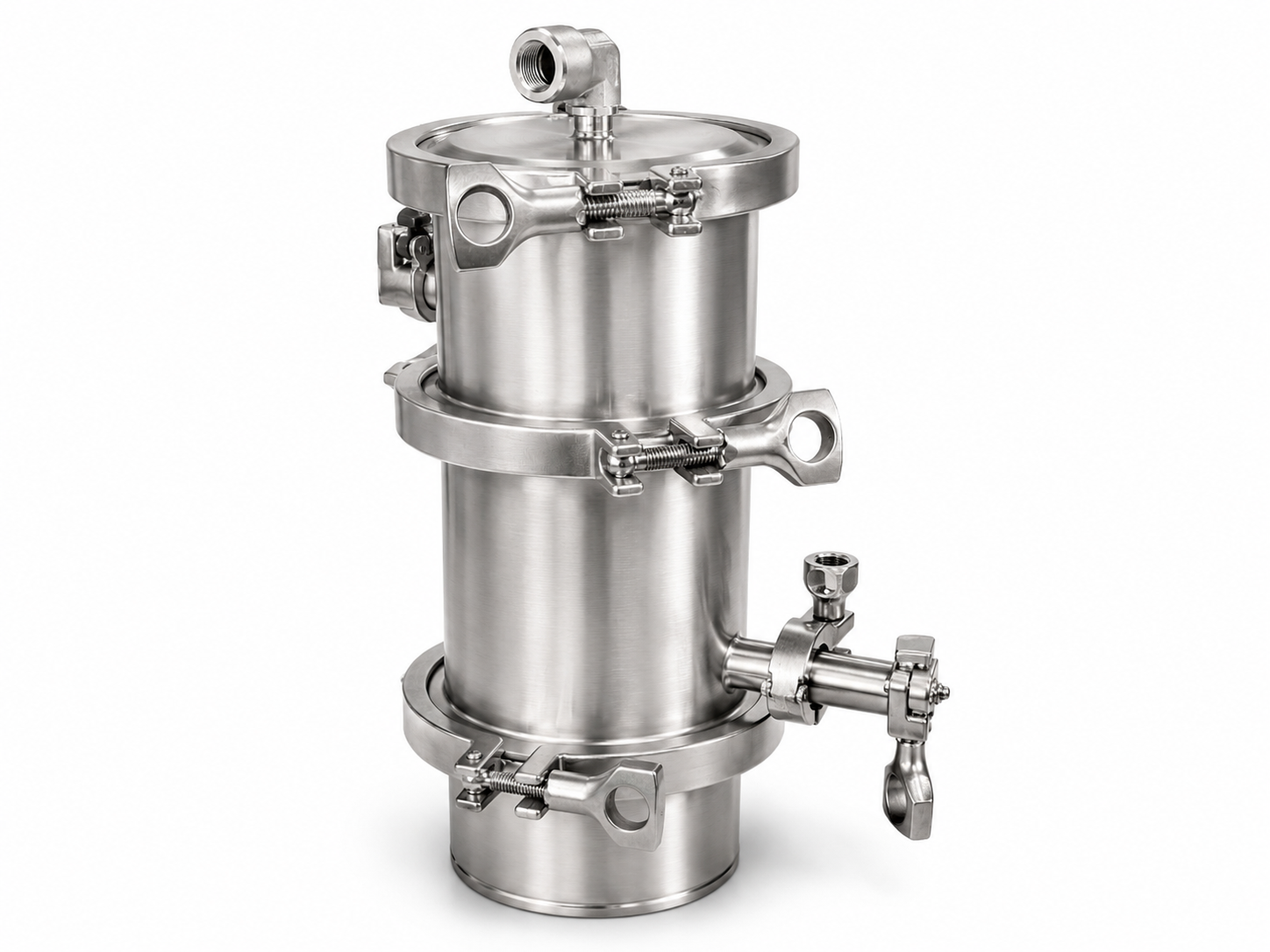
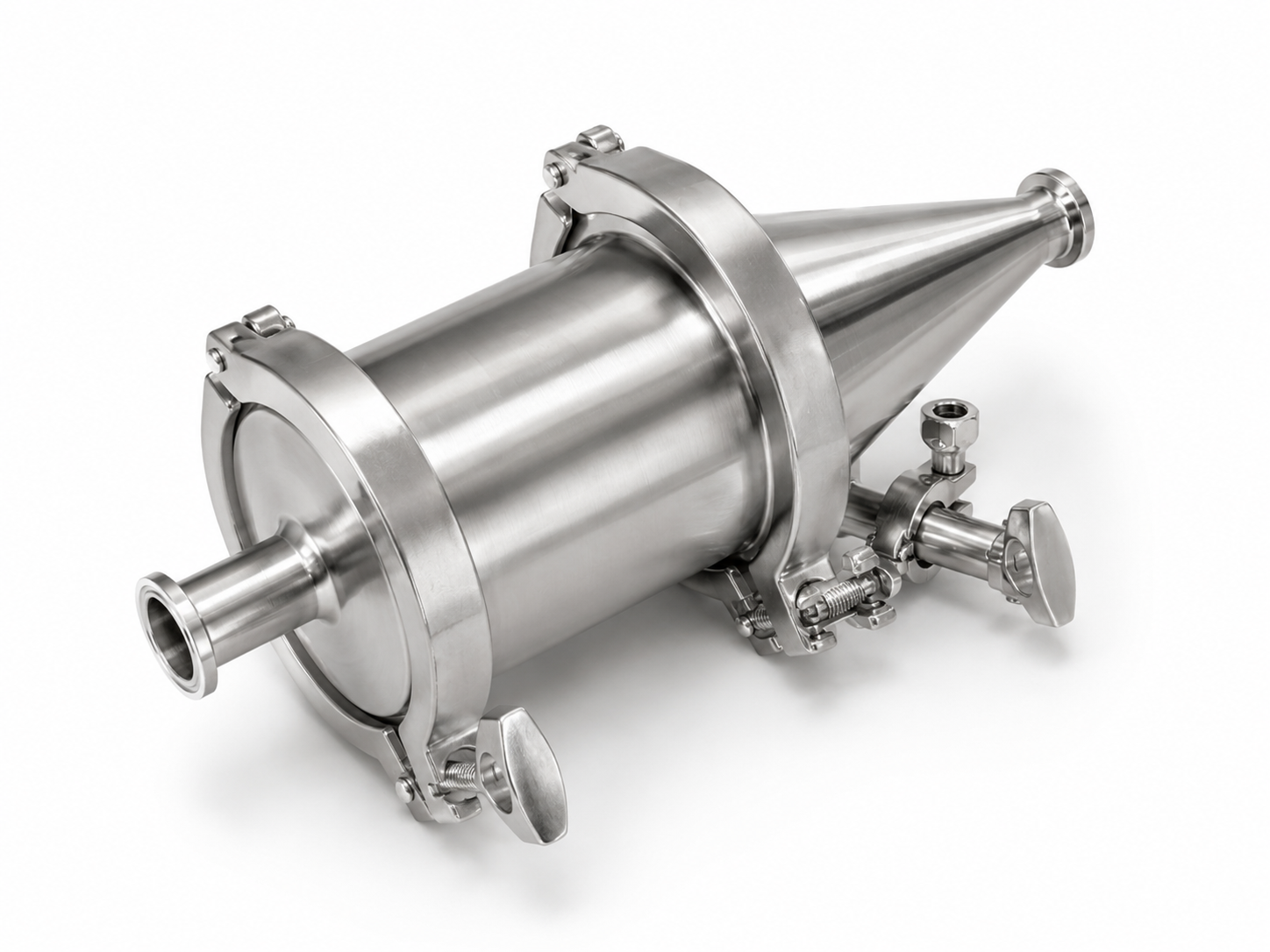
Model 00 Accessories
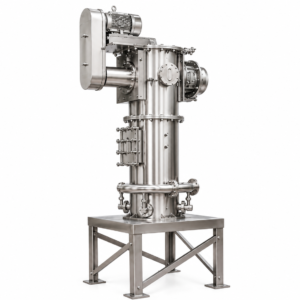
Model 02 Jet Mill
Unsurpassed Quality and Productivity in Ultra-Fine (0.5 – 45 Micron) Grinding Applications The Model 02 System delivers unsurpassed efficiency and effectiveness in the ultra-fine grinding and classification of a wide range and variety of materials.
Each system is custom-engineered to meet a broad range of grinding applications. This model is designed for simple operation and keeps production costs down. Systems are engineered for laboratory, pilot, and full-scale production from 1 to 10,000 lb/hr.
ADVANTAGES
- 500 grams to 5 kilograms per hour
- Improved grinding efficiency
- No mechanical heat
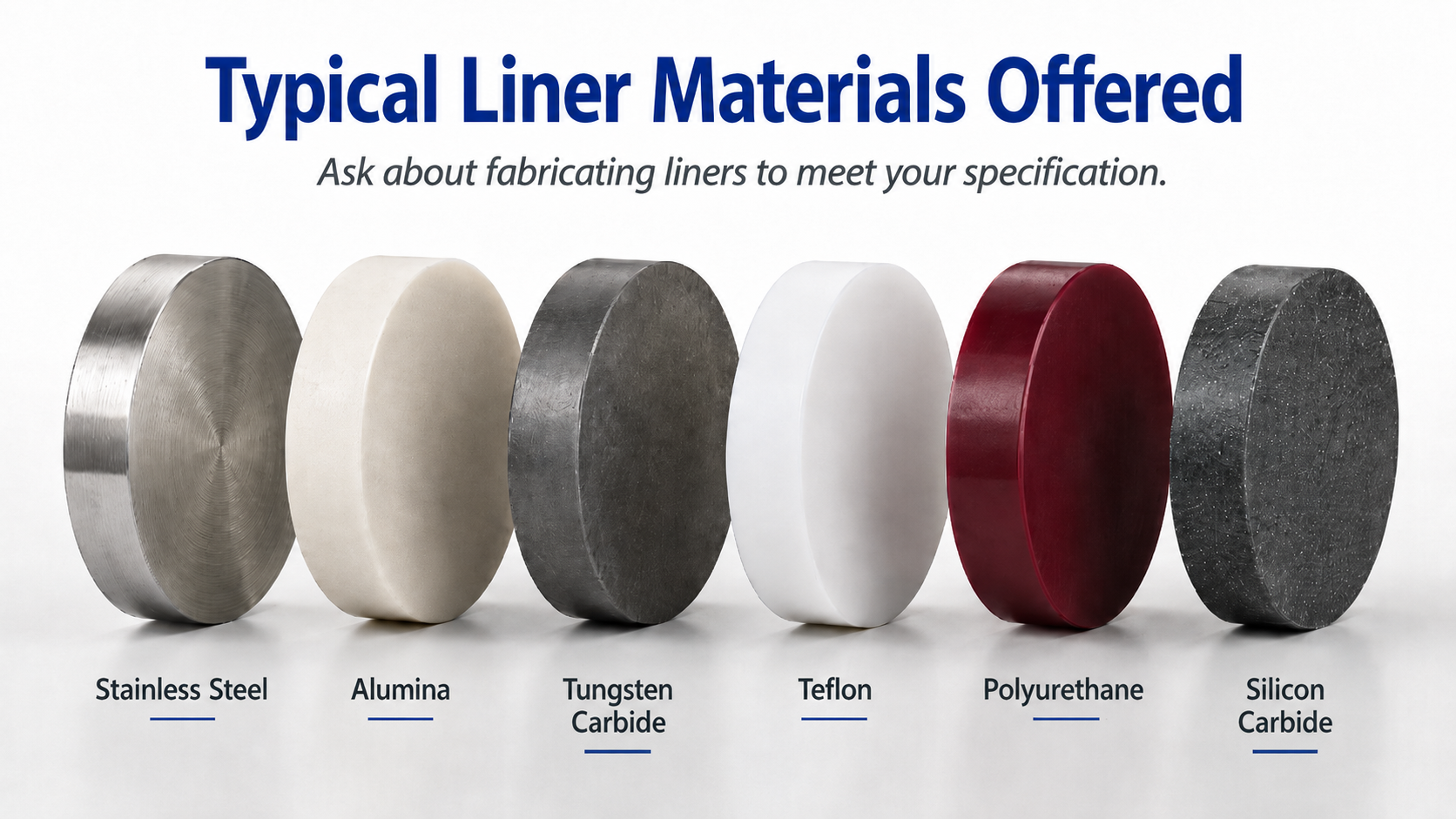
- Replaceable liners for enhanced performance
- Simple clean up and change overs
- Suitable for grinding, blending, coating, and chemical addition
Model 02 Accessory Options
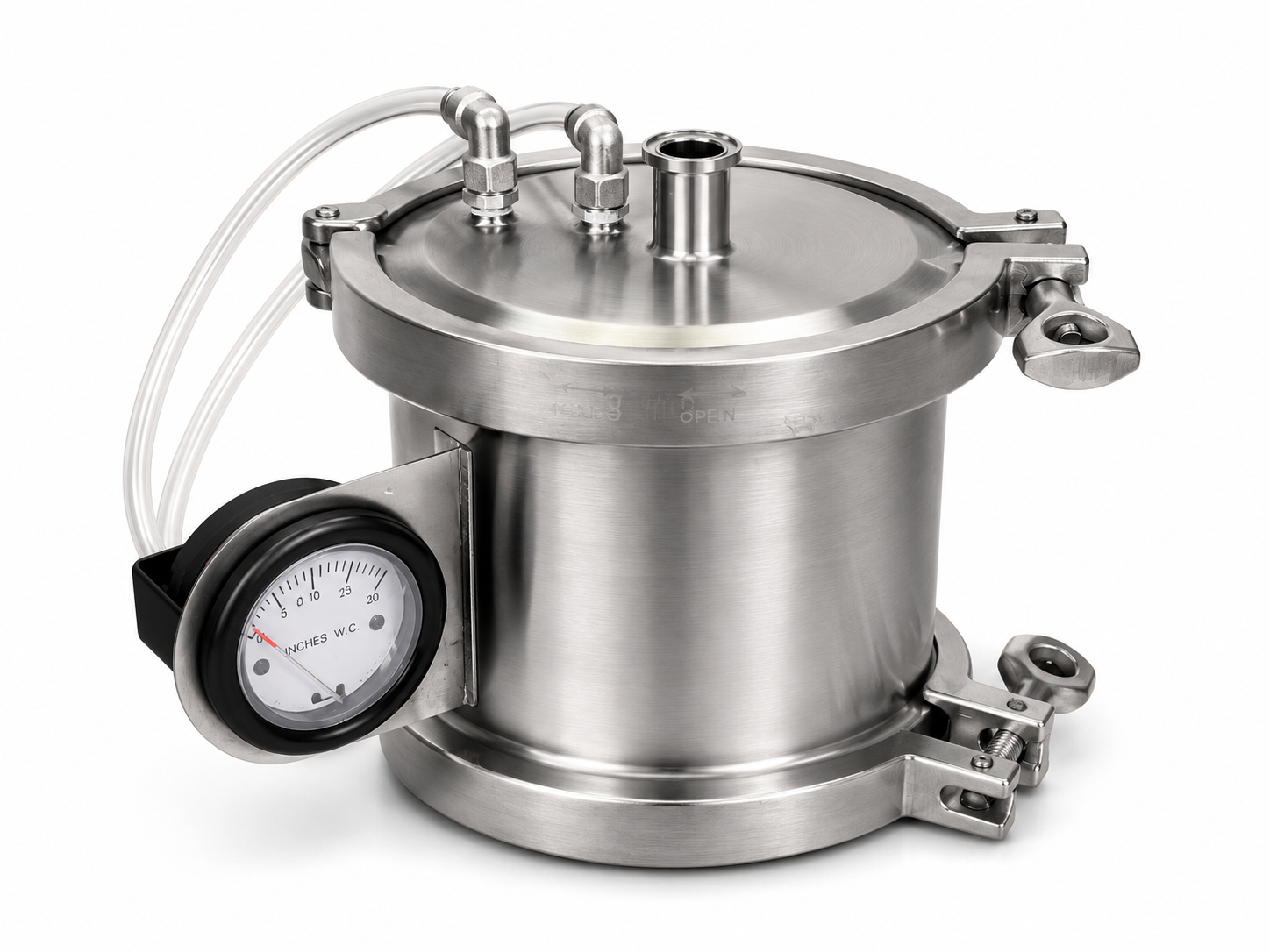
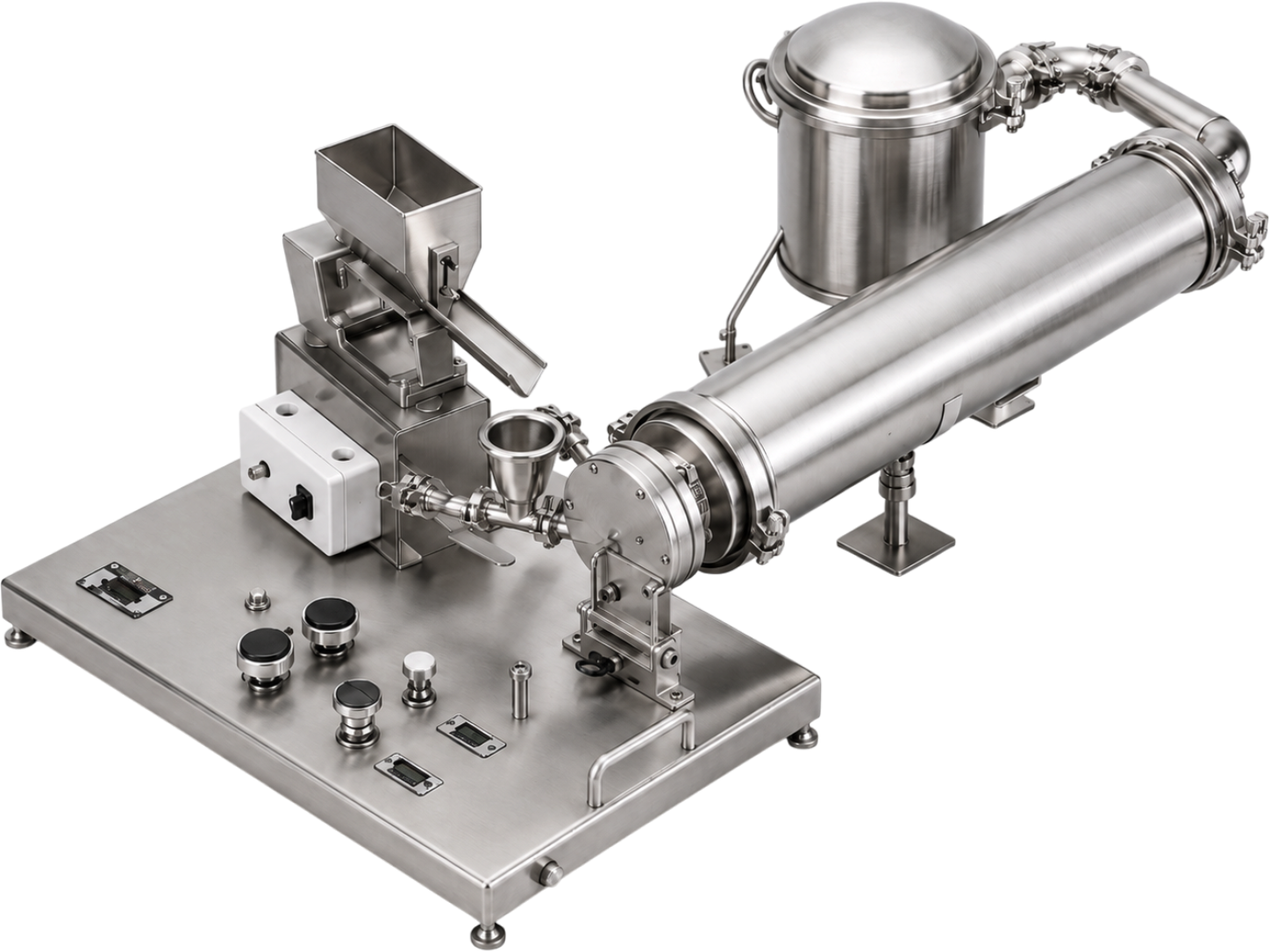
Filter Sleeve Collection with HEPA
Benchtop option that allows for filter sleeve collection. The filter is encased by a stainless steel filter housing that connects to the outlet of the jet mill and the inlet of our HEPA filtration module.
Table System with High Yield Collector and HEPA Filter
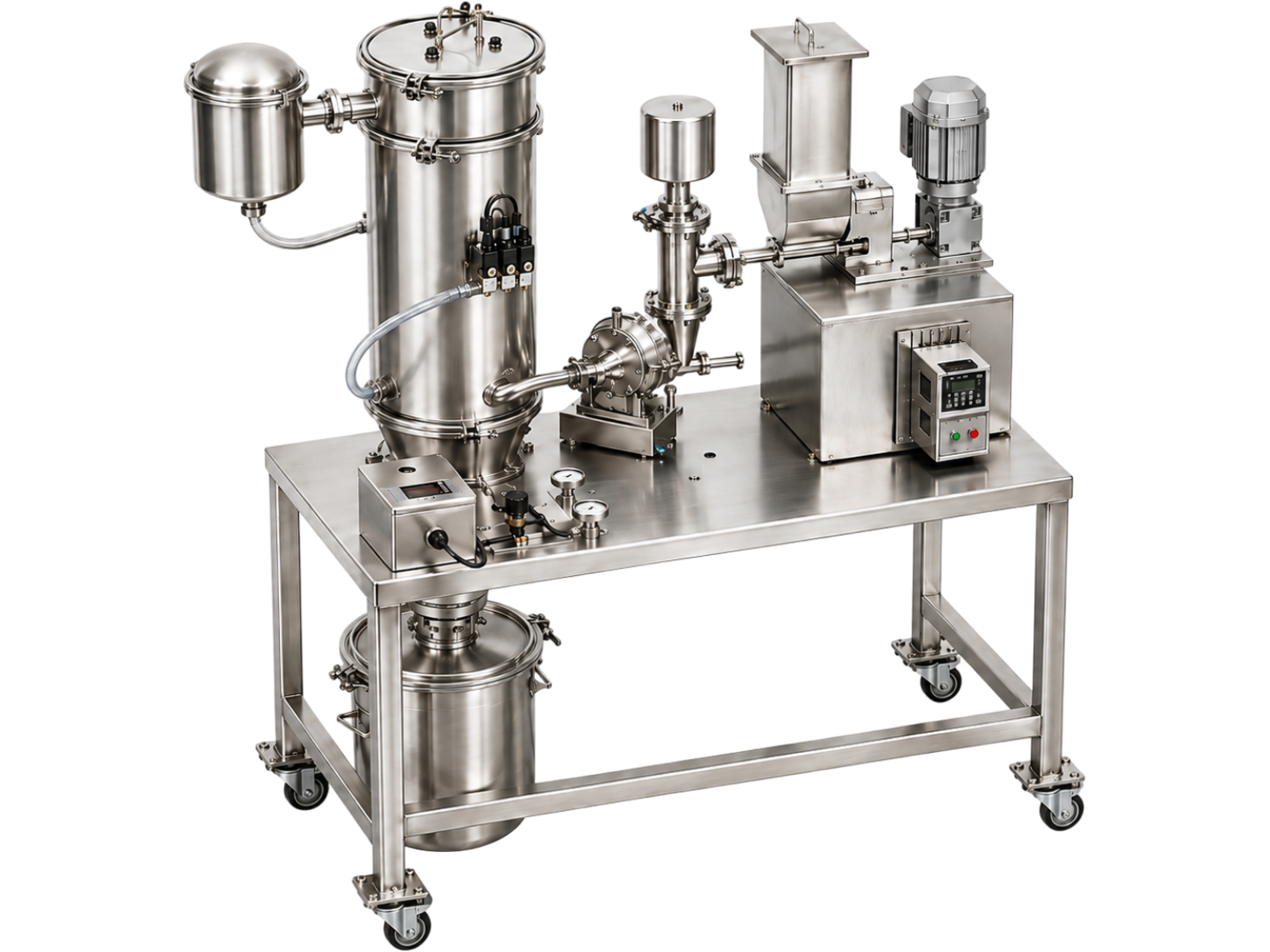
For large collections up to 20.0 liters, a table system cam be used to house the milling system, High Yield Collection Module, and HEPA Filtration Module.
GLOVE BOX INTEGRATION FOR CONTROLLED ATMOSPHERE JET MILLING
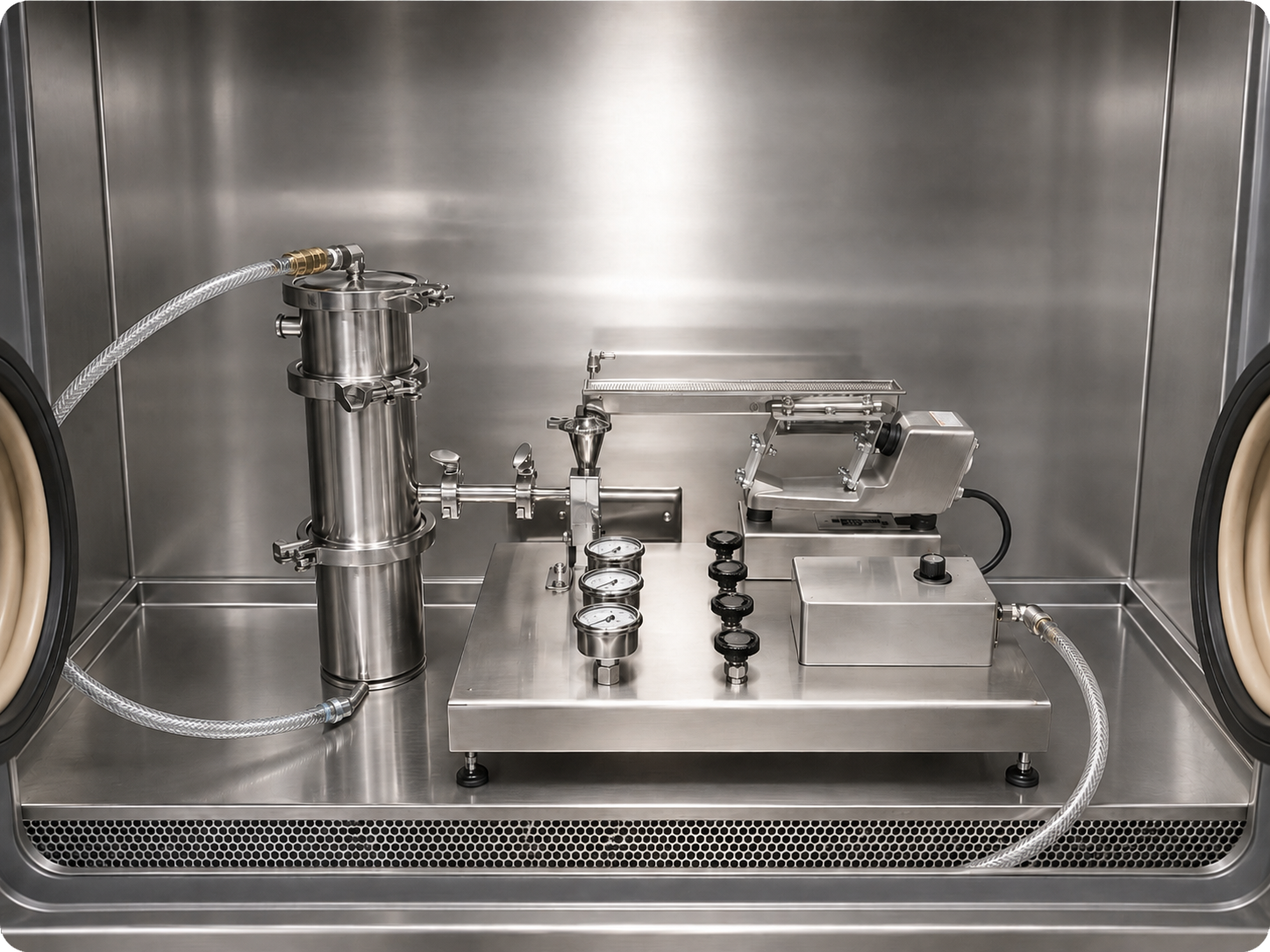
Jet milling inside a glove box is beneficial when processing sensitive, reactive, hazardous, or high-value powders that require a controlled environment. By integrating the jet mill within a sealed glove box, materials can be handled under inert gas, low-humidity, or containment conditions while minimizing operator exposure and outside contamination. This is especially valuable for pharmaceutical compounds, battery materials, specialty chemicals, pyrophoric powders, and moisture-sensitive materials.
The enclosed setup allows feeding, milling, collection, and cleaning to take place in a controlled workspace, helping protect both the product and the operator while improving process consistency, safety, and material recovery.
RENTAL OPTIONS AVAILABLE
Renting a mill gives your team the ability to test particle size reduction directly in your own laboratory, using your actual material, process conditions, and analytical methods. This allows you to evaluate performance, confirm target particle size, study product recovery, and determine whether jet milling is the right solution before making a capital equipment purchase.
Rental units are especially useful for short to long term projects, feasibility studies, process development, and customer trials where flexibility and speed are important. By testing in-house, your scientists and engineers can better understand how the material feeds, mills, and collects, while reducing project risk and helping justify the correct equipment configuration for future production needs.