
Rotor Milling Systems
Versatile Particle Size Reduction for Laboratory, Pilot, and Production Applications
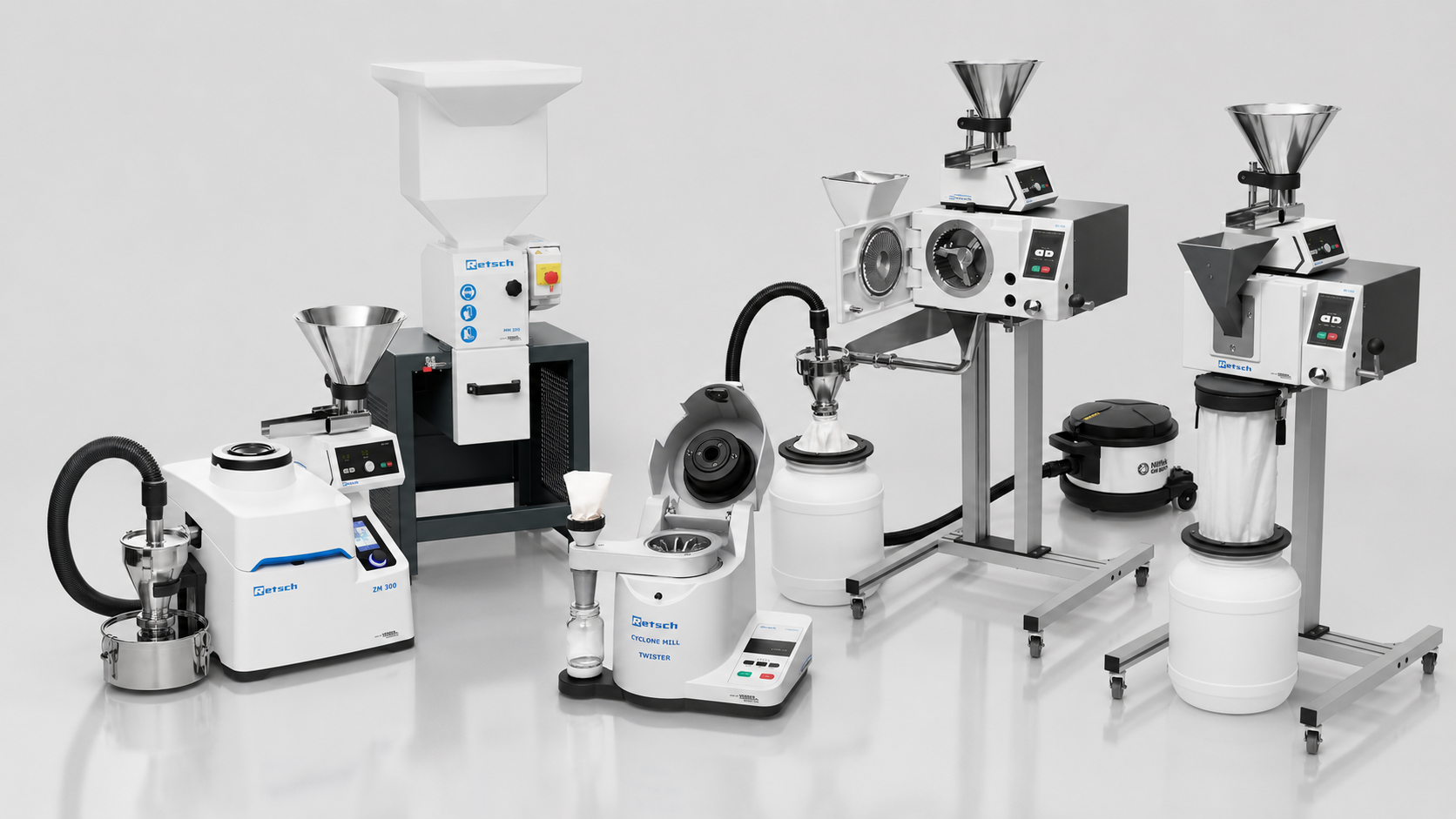
Rotor milling systems provide fast, efficient particle size reduction for a wide range of soft, medium-hard, brittle, fibrous, and heat-sensitive materials. Using high-speed impact, shearing, and cutting forces, these versatile mills can handle applications ranging from coarse pre-crushing and deagglomeration to fine grinding and analytical sample preparation. Interchangeable rotors, screens, liners, and collection options allow each system to be configured for the required feed size, final particle size, throughput, and material characteristics.
Optional cyclone collection, dust control, cryogenic processing, and wear-resistant components further improve product recovery, reduce heat buildup, and support clean, repeatable operation in laboratory, pilot, and production environments.
 Rugged Construction
Consistant Results
Easy to Clean
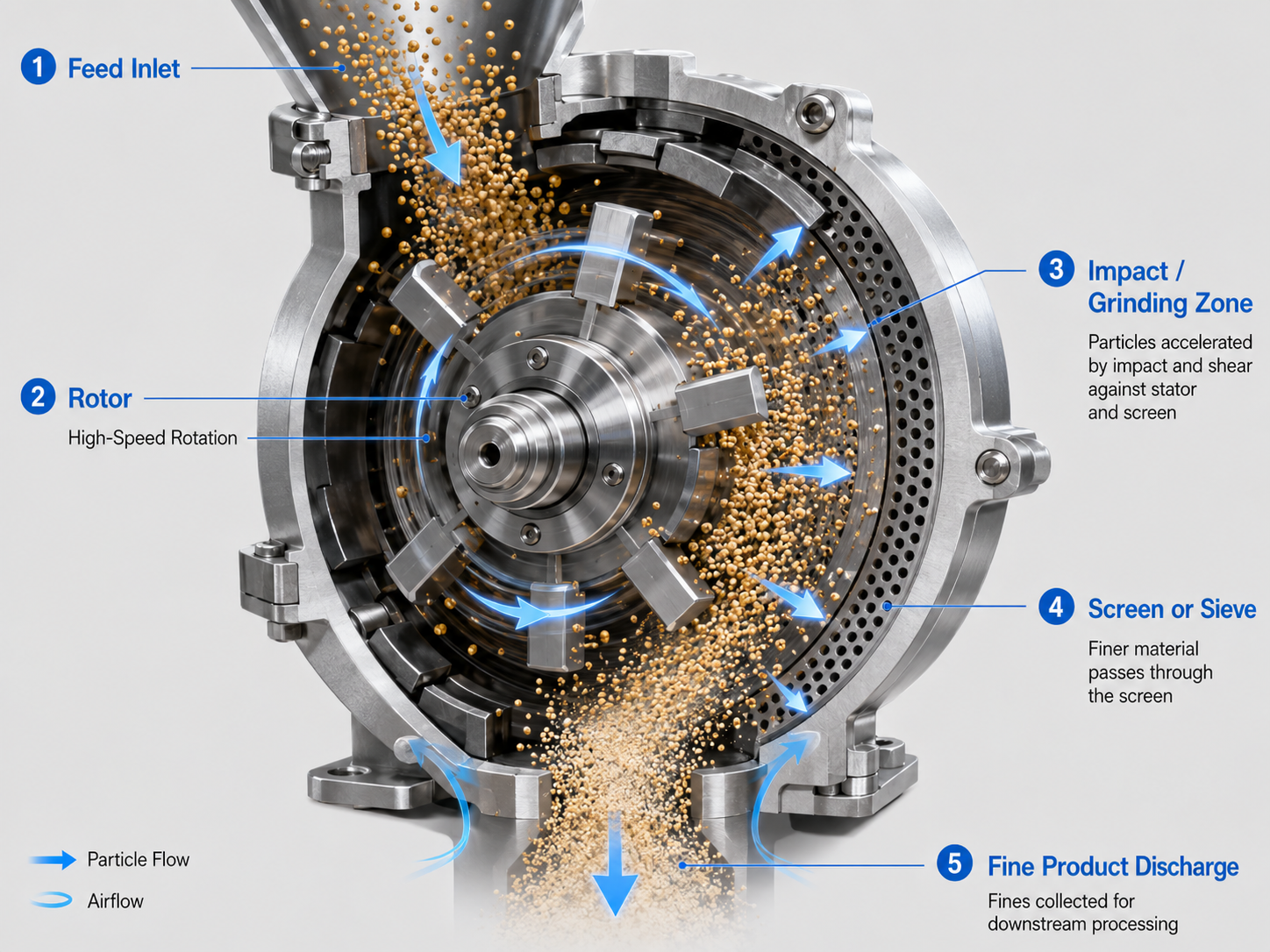
How Rotor Mills Work
Rotor mills reduce particle size by feeding material into a grinding chamber where a high-speed rotor spins against a stationary screen, liner, or stator. As the rotor accelerates the feed material, the particles are broken down by repeated impact, shearing, and collision forces. Once the particles become small enough, they pass through the screen or sieve openings and are discharged as the finished product.
By changing the rotor design, speed, and screen size, rotor mills can be adjusted to handle different materials and achieve a wide range of final particle sizes, making them useful for everything from coarse size reduction to fine grinding.
Dust Free Cyclone Options
A cyclone collection system helps create a dust-free crushing process by pulling airborne fines and loose particles away from the jaw crusher during operation. As material is crushed, fine dust can escape from the discharge area and handling points; the cyclone uses airflow to capture those particles and separate them from the air stream before they spread into the lab or production area. This improves operator cleanliness, reduces housekeeping, helps protect nearby equipment, and can recover valuable material that would otherwise be lost as dust.
For applications involving dry, brittle, abrasive, or hazardous powders, cyclone collection also supports a cleaner, more controlled process from crushing through final collection.
Application Examples
 Pharmaceutical Powders
Food and Feed Samples
Polymers and Plastics
Battery Materials
Minerals and Ceramics
Cosmetics and Personal Care Products
Recycling Applications
Environmental & Recycling
Biomass and Fibrous Materials
Quality-Control Sample Preparation
Why Choose Rotor Mills
Versatile Material Processing
Wide Particle-Size Range
Fast, Efficient Grinding
Adjustable Final Particle Size
Flexible Collection Options
Easy Cleaning and Maintenance
Common Rotor Milling Goals
Reduce Particle Size
Achieve a Consistent Final Size
Deagglomerate Powders
Prepare Representative Samples
Improve Mixing and Blending
Have a Material Challenge?
Tell us about your material and goals, and we’ll recommend the right solution.
Discuss My SampleUltra Centrifugal Mill 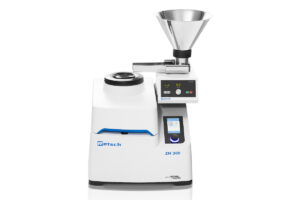
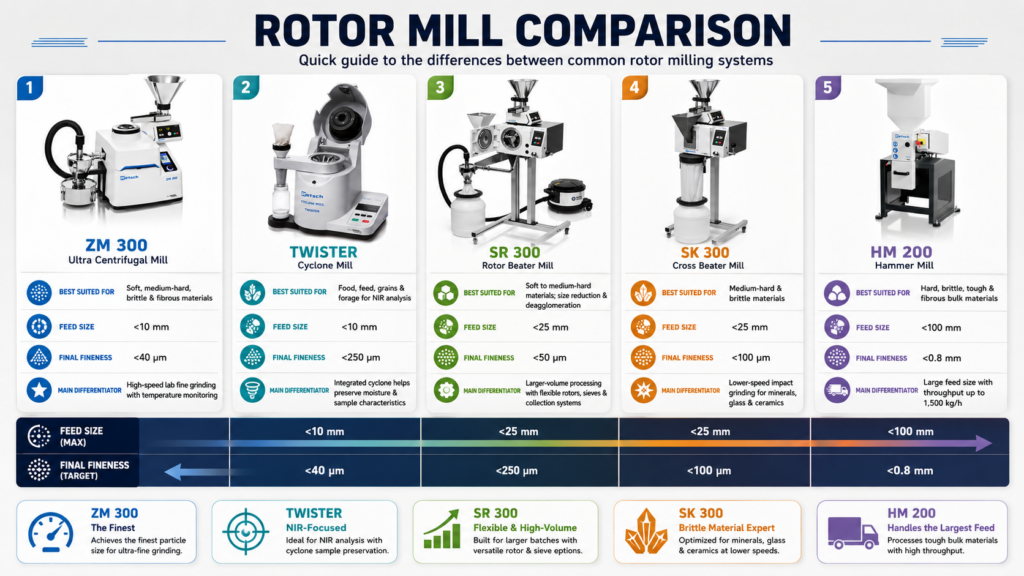
ZM 300
- Feed material: soft, medium-hard, brittle, fibrous
- Material feed size*: < 10 mm
- Final fineness*: < 40 µm
Cross Beater Mill 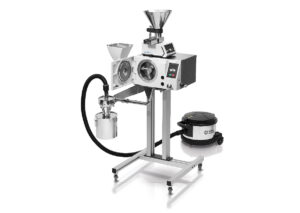
SK 300
- Feed material: medium-hard, brittle
- Material feed size*: < 25 mm
- Final fineness*: < 100 µm
Learn More ->
Rotor Beater Mill 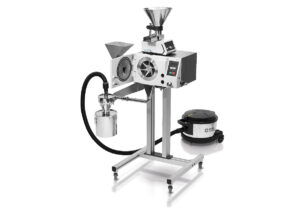
SR 300
- Feed material: soft, medium-hard
- Merial: soft, medium-hard
- Material feed size*: < 25 mm
- Final fineness*: < 50 µm
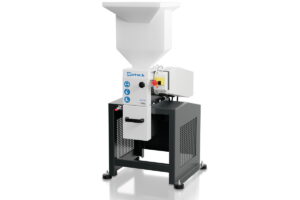
Hammer Mill
HM 200
- Feed material: medium-hard, hard, brittle, tough, fibrous
- Material feed size*: < 100 mm
- Final fineness*: < 0.8 mm
Additional Benefits
 Higher Product Recovery
Reduced Cross-Contamination
Improved Process Control
Scalable Processing
Lower Heat Exposure
Integration with Downstream Equipment
Why Start With Testing or Renting
Free Feasibility Testing
Test your material in our lab on the right system. Receive data and recommendations at no cost.
Validate Before You Buy
Reduce risk with real data and expert recommendations.
Bridge Capacity Needs
Use tolling or rental systems to meet demand and scale with confidence.
GET MY GRINDING RECOMMENDATION
Tell us about your material and target result.
An application specialist can narrow the equipment family, identify missing process information, and recommend testing or a next step.
- Material and current form
- Starting and target particle size
- Batch size or throughput
- Temperature, purity, dust, and cleaning constraints