
Planetary Ball Mill Systems
High-Energy Grinding for Ultrafine Particle Size Reduction and Advanced Materials Research
Planetary Ball Mills provide the high-energy impact and friction required for rapid, reproducible grinding of soft, hard, brittle, fibrous, and composite materials. Their counter-rotating grinding jars generate intense centrifugal and Coriolis forces, producing analytical fineness below 1 µm and, with wet colloidal grinding, particle sizes below 100 nanometers.
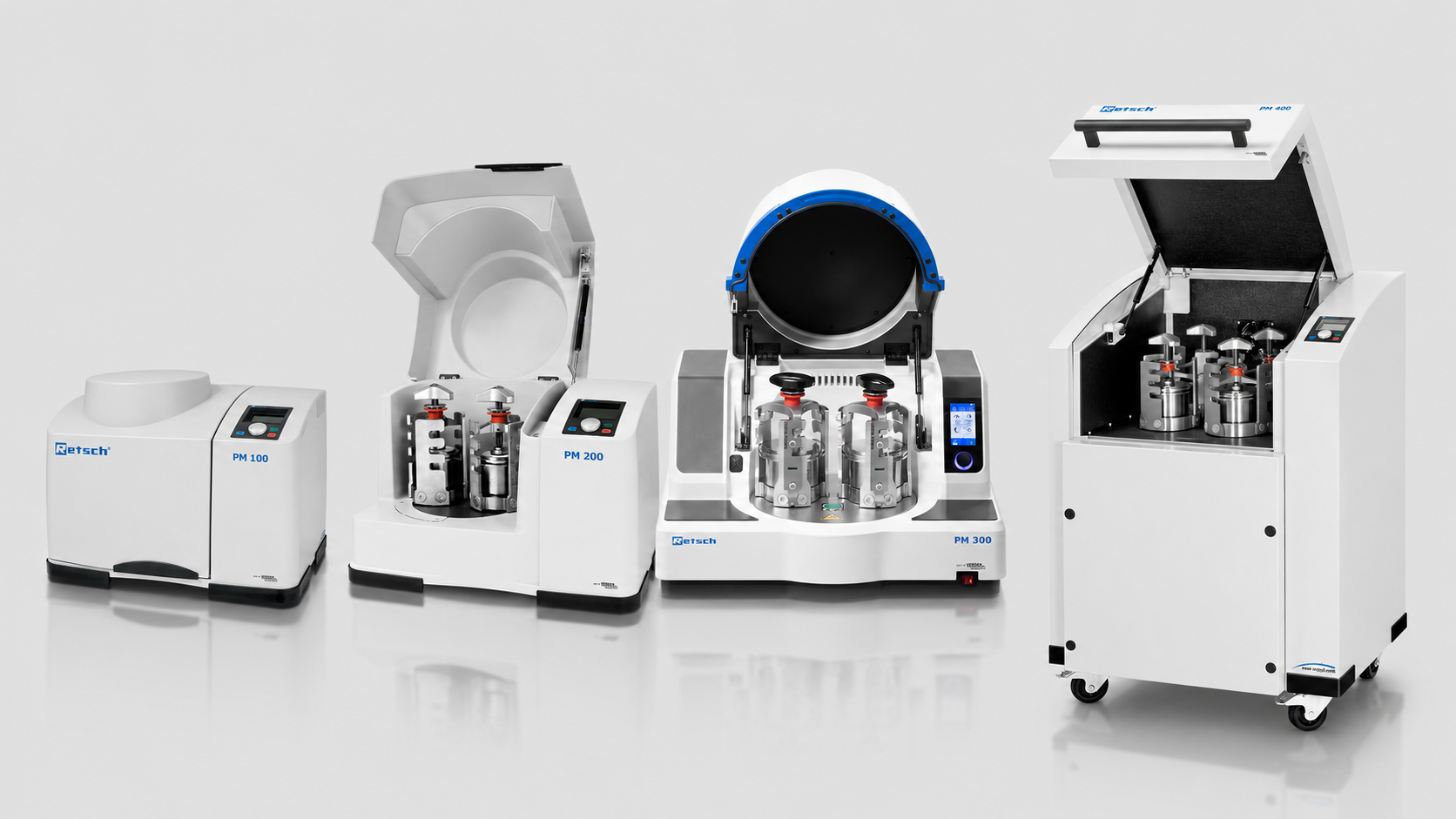
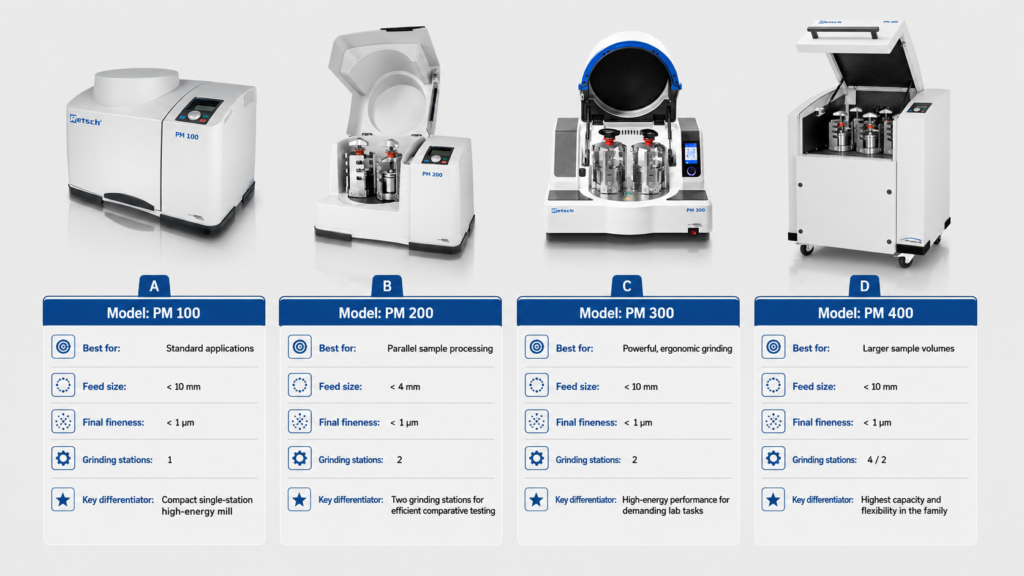
The product family ranges from the compact, single-station PM 100 and dual-station PM 200 to the powerful 800-rpm PM 300 and the four-station PM 400 for larger sample volumes and higher throughput.
A broad selection of grinding jar sizes, ball materials, operating programs, aeration lids, and pressure-and-temperature monitoring options allows each system to be configured for dry grinding, wet grinding, mixing, homogenization, mechanical alloying, mechanosynthesis, co-crystal screening, and advanced materials research.
 Rugged Construction
Consistant Results
Easy to Clean


How Planetary Ball Mills Work
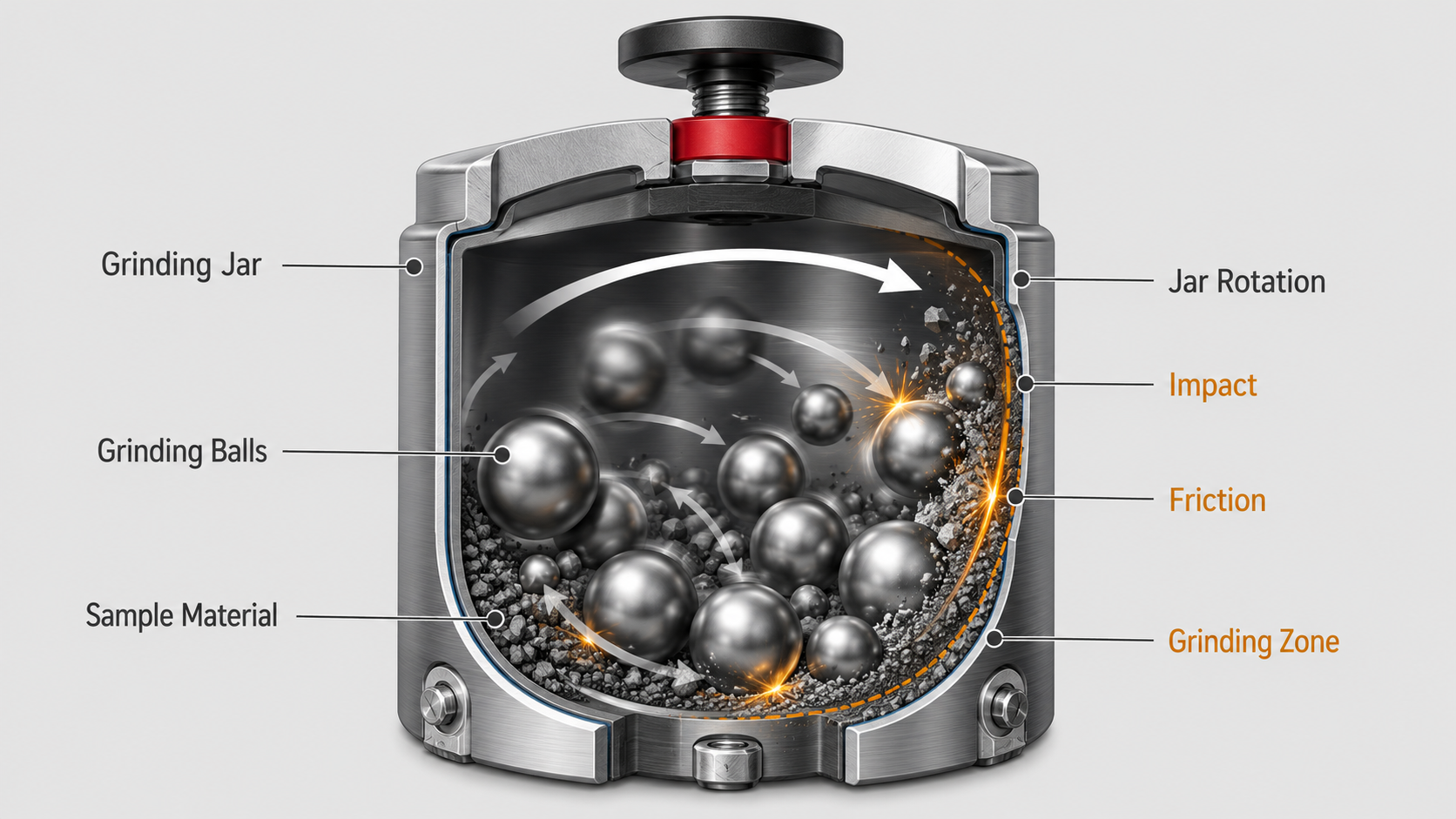
Planetary ball milling uses one or more sealed grinding jars mounted on a rotating support disc. As the support disc turns, each jar rotates around its own axis in the opposite direction, generating powerful centrifugal and Coriolis forces.
These combined motions accelerate the grinding balls inside the jar, causing repeated high-energy impacts, compression, and friction against the sample material and jar walls. The continuous collision and shearing action rapidly reduces particles, blends components, and creates highly uniform samples. Depending on the grinding media, speed, time, and whether the process is performed dry or wet, planetary ball mills can achieve fine, ultrafine, and even nanometer-scale particle sizes.
Application Examples
 Battery Materials
Mechanical Alloying
Nanoparticle Production
Ceramics Processing
Pharmaceutical Research
Mineral and Geological Analysis
Mechanochemical Synthesis
Pigments and Coatings
Environmental Sample Preparation
Polymer and Composite Research
Why Choose Planetary Ball Mills
Sealed, Dust-Free Processing
Precise Programmable Operation
Efficient Use of Small Samples
Parallel Sample Processing
Compact Laboratory Design
Fast Changeover Between Batches
Common Planetary Ball Milling Goals
Break Down Agglomerates
Increase Specific Surface Area
Improve Powder Dispersion
Create Representative Analytical Samples
Modify Material Propertie
Have a Material Challenge?
Tell us about your material and goals, and we’ll recommend the right solution.
PLANETARY BALL MILL
PM 100
For standard applications
- Material feed size: < 10 mm
- Final fineness: < 1 µm
- Speed ratio: 1: -2
- Grinding Stations: 1
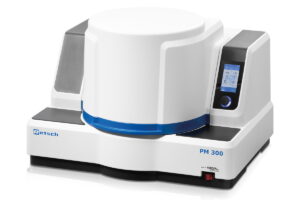
PLANETARY BALL MILL
PM 300
Powerful & ergonomic
- Material feed size: < 10 mm
- Final fineness: < 0.1 µm
- Speed ratio: 1: -2
- Grinding Stations: 2
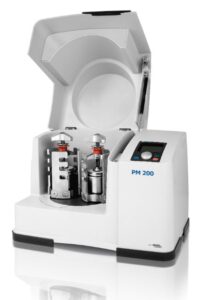
PLANETARY BALL MILL
PM 200
2 grinding stations
- Material feed size: < 10 mm
- Final fineness: < 1 µm
- Speed ratio: 1: -2
- Grinding Stations: 2
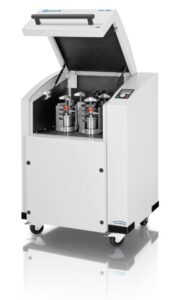
PLANETARY BALL MILL
PM 400
For larger sample volumes
- Material feed size: < 10 mm
- Final fineness: < 1 µm
- Speed ratio: 1: -2 / 1:2-5 / 1:3
- Grinding Stations: 4/2
Additional Benefits
 Contamination-Control Options
Controlled-Atmosphere Capability
Flexible Energy Adjustment
Combined Processing Steps
Improved Method Scalability
Wear-Resistant Configurations
Why Start With Testing or Renting
Free Feasibility Testing
Test your material in our lab on the right planetary ball milling system. Receive data and recommendations at no cost.
Validate Before You Buy
Reduce risk with real data and expert recommendations.
Bridge Capacity Needs
Use tolling or rental systems to meet demand and scale with confidence.
GET MY GRINDING RECOMMENDATION
Tell us about your material and target result.
An application specialist can narrow the equipment family, identify missing process information, and recommend testing or a next step.
- Material and current form
- Starting and target particle size
- Batch size or throughput
- Temperature, purity, dust, and cleaning constraints