
ASSISTING & SUPPORTING EQUIPMENT
ASSISTING & SUPPORTING EQUIPMENT
Connect feeding, drying, cleaning, sample preparation, and product collection into a more controlled material-processing workflow. Glen Mills helps select the supporting equipment that improves repeatability, recovery, throughput, and day-to-day operation.
THE SYSTEM AROUND THE MACHINE
Better results depend on more than the primary equipment.
A mill, sieve shaker, analyzer, or mixer can only perform consistently when material enters at the right rate, has the right moisture condition, is recovered efficiently, and can be cleaned or prepared for the next analytical step.
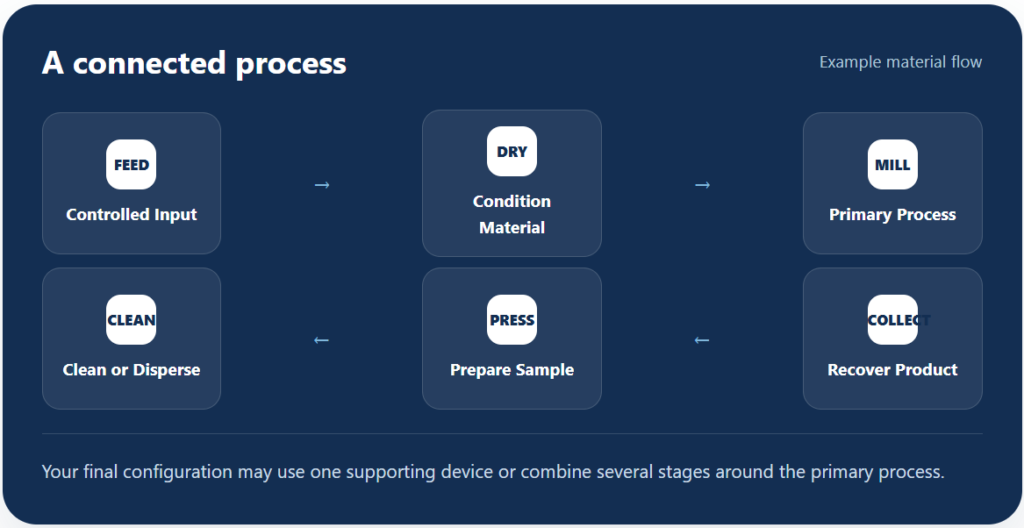
SUPPORTING EQUIPMENT CATEGORIES
Build the process around your material.
Each category addresses a different source of process variability—from uneven feeding and excess moisture to poor sample recovery or inconsistent analytical pellets.
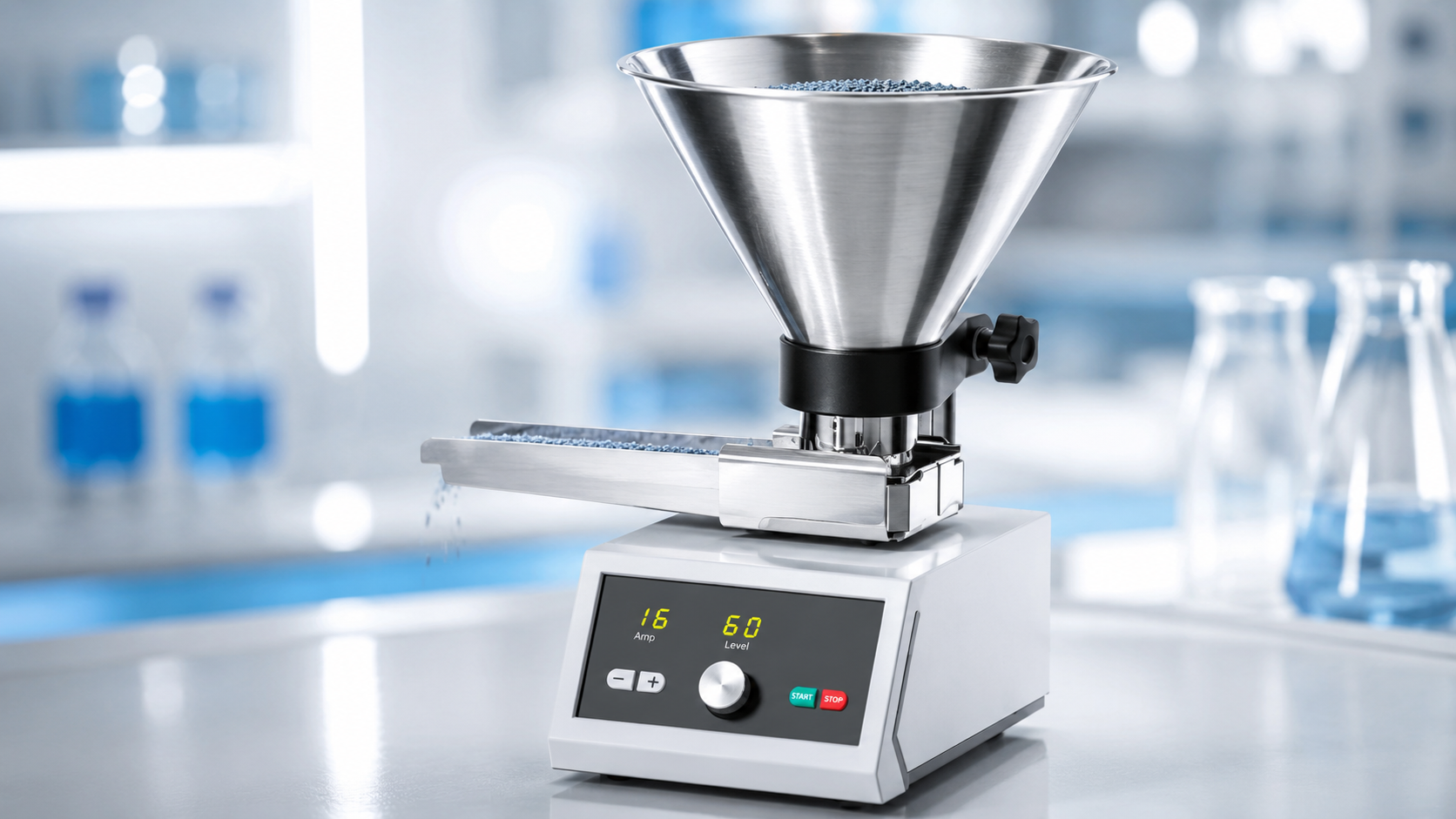
FEEDERS
Maintain a controlled, repeatable feed rate.
Feeders introduce powders, granules, and other pourable bulk materials at a consistent rate so downstream mills, sample dividers, and particle-measuring systems can operate more efficiently and reproducibly.
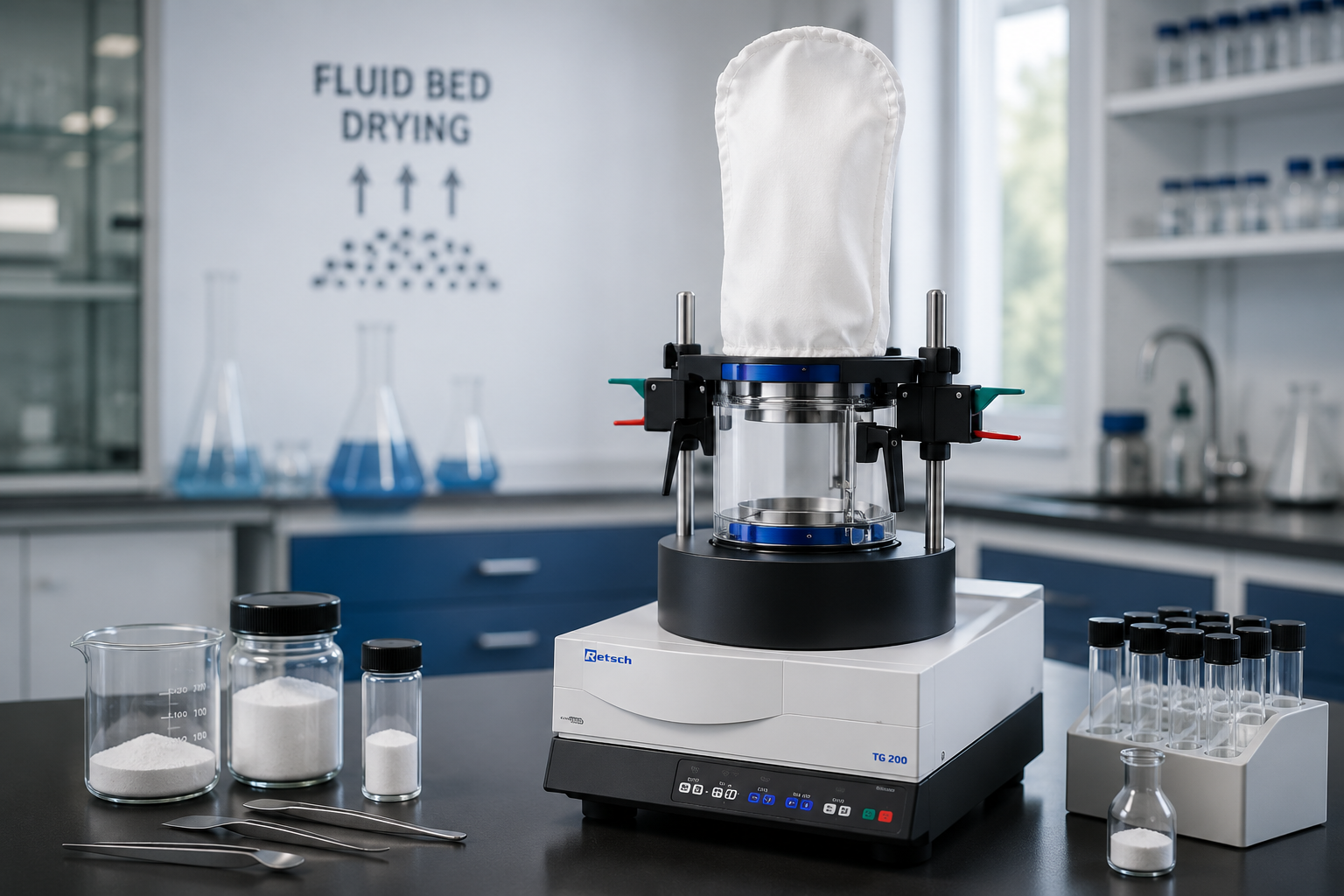
FLUID BED DRYERS
Dry bulk material without localized overheating.
Feeders introduce powders, granules, and other pourable bulk materials at a consistent rate so downstream mills, sample dividers, and particle-measuring systems can operate more efficiently and reproducibly.
Fluid bed dryers suspend and mix particles in a controlled air stream, exposing more surface area for fast, even moisture removal. They are well suited to quality control, sample preparation, process development, and R&D.
ULTRASONIC BATHS
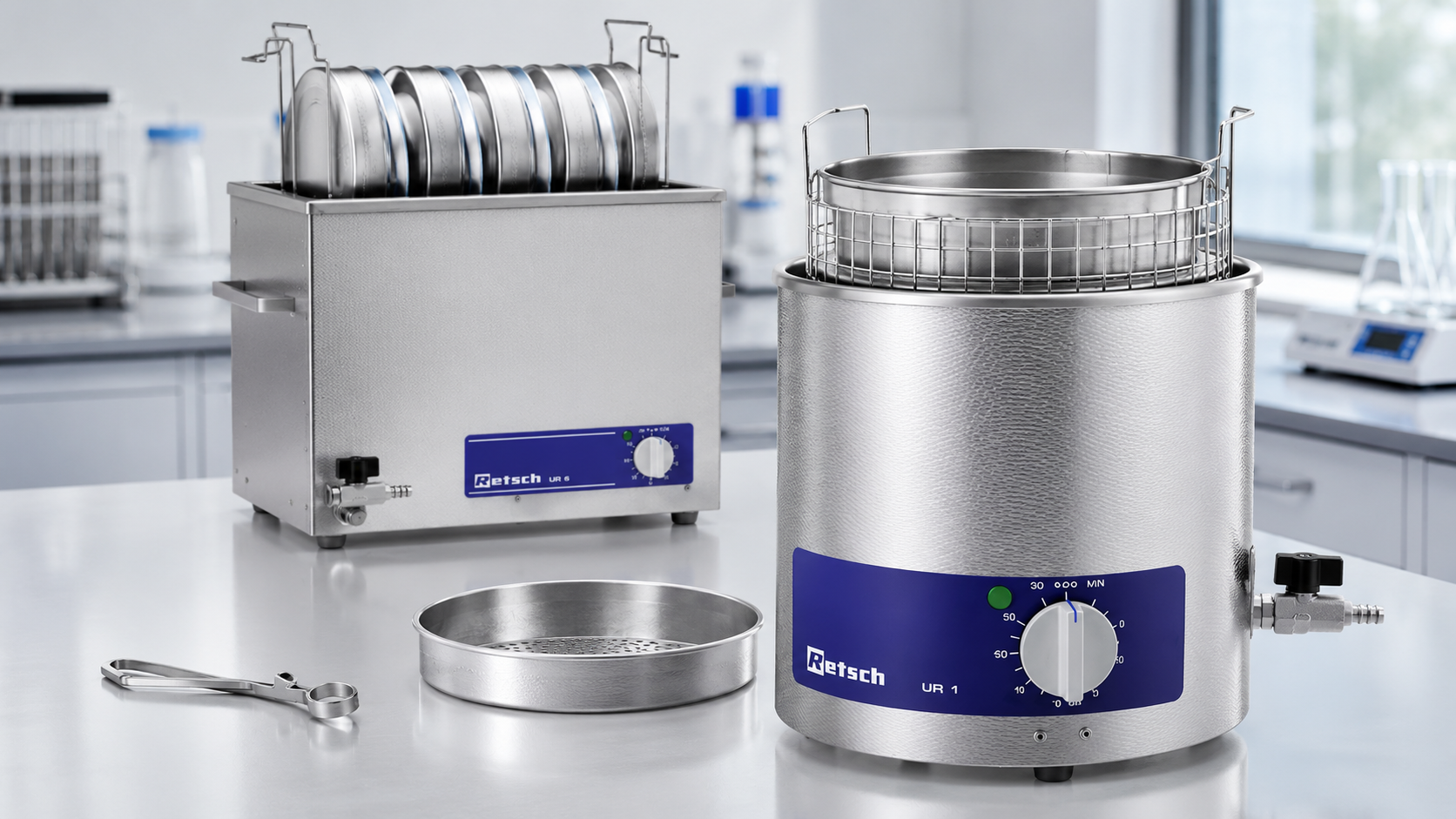
Clean test sieves and process components thoroughly and gently.
Ultrasonic baths use cavitation to reach openings, mesh surfaces, and difficult geometries that are hard to clean manually. The same ultrasonic energy can also support dispersion, homogenization, and degassing tasks.
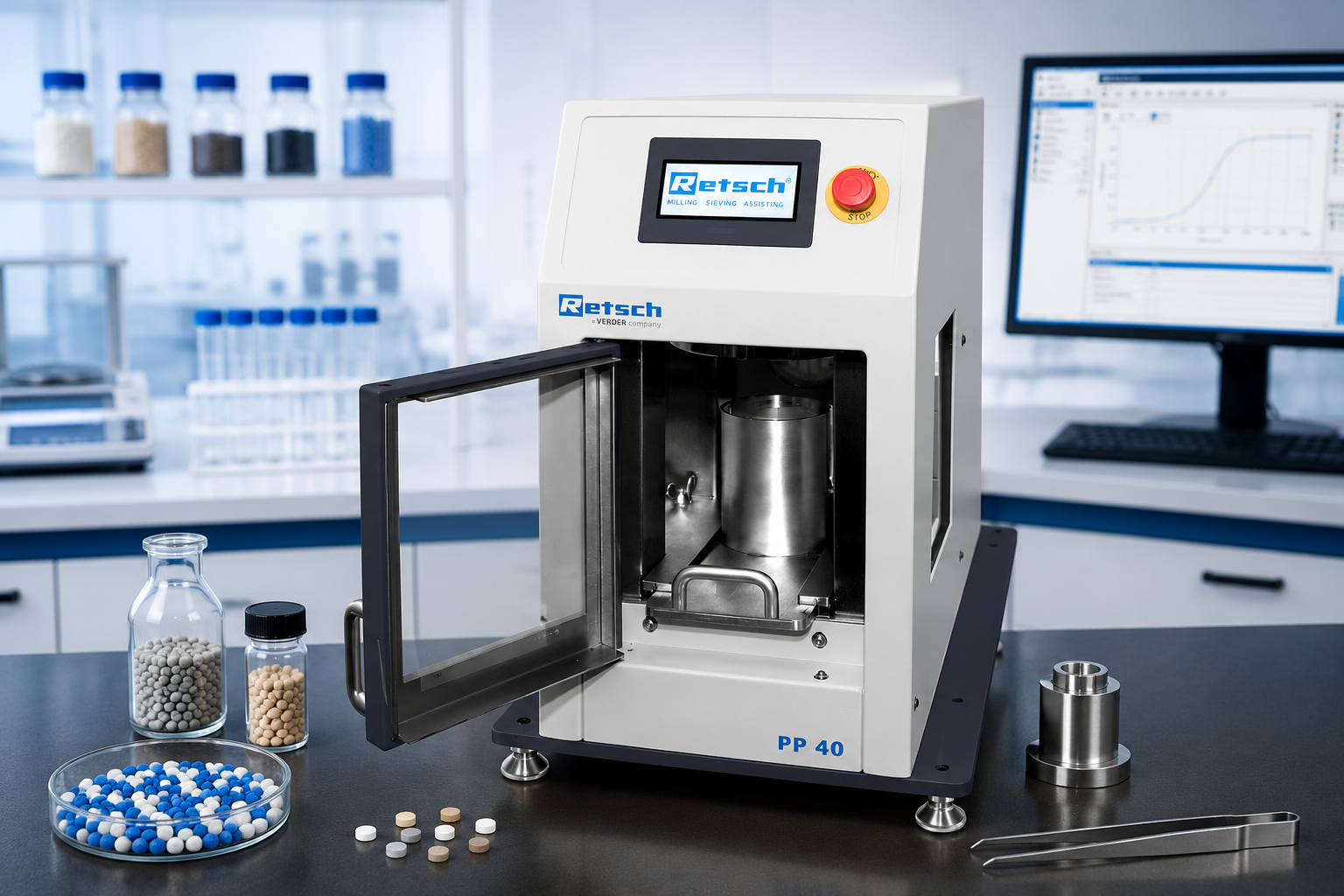
PELLET PRESSES
Produce stable, consistent pellets for reliable analysis.
Pellet presses compact prepared powders into strong pellets with controlled pressure. Consistent pellet density and surface quality support meaningful X-ray fluorescence and other analytical workflows.
COLLECTION SYSTEMS
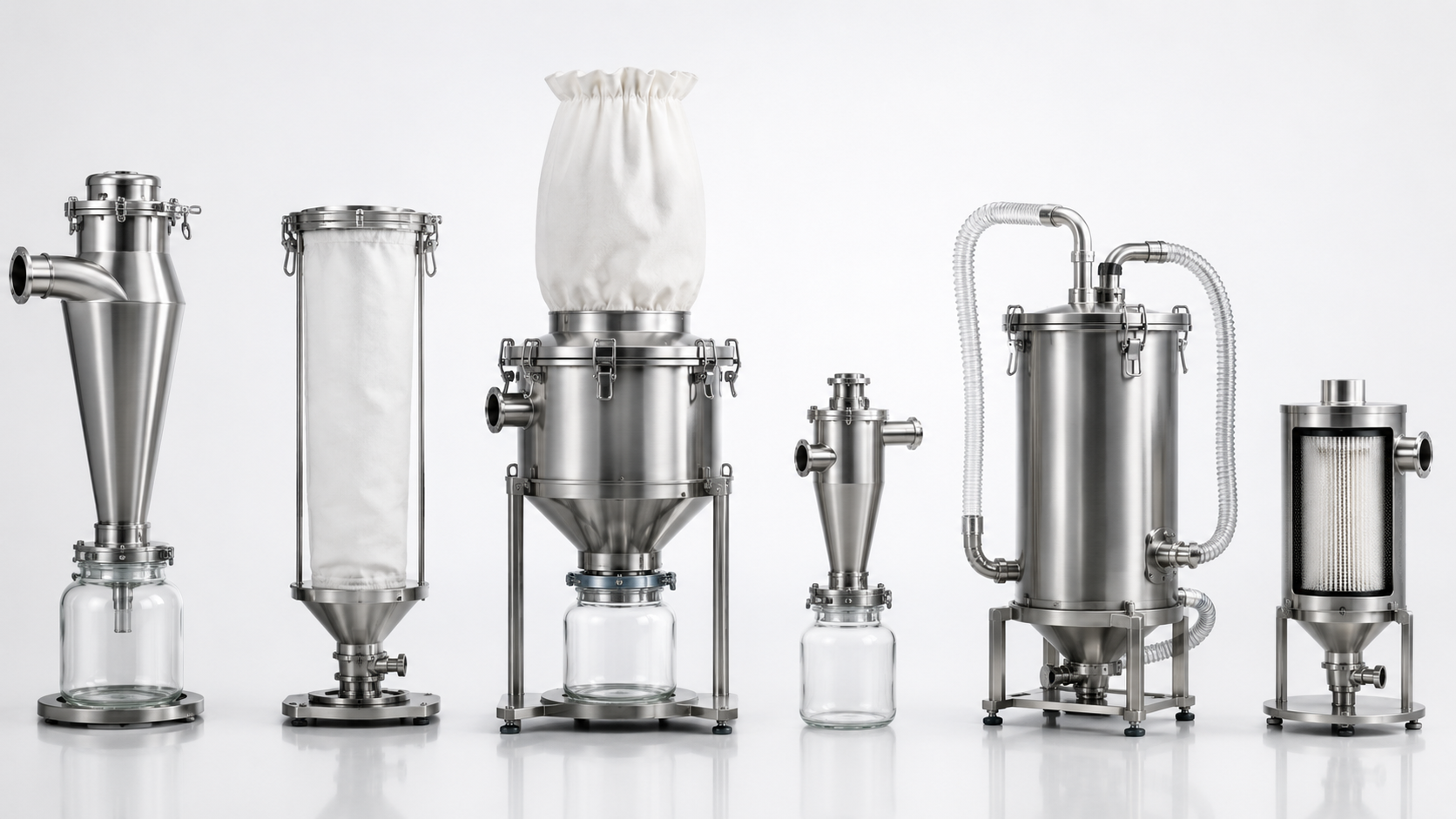
Recover process material efficiently and keep the workflow contained.
Collection systems can include cyclones, filter bags, high-yield collectors, small-batch collectors, vacuum assistance, and HEPA filtration. The correct configuration depends on particle size, batch quantity, product value, dust characteristics, and cleanliness requirements.
EXAMPLE PROCESS CONFIGURATIONS
See how the pieces work together.
Supporting equipment should be selected as part of the process—not added only after problems with feeding, recovery, cleaning, or sample consistency appear.
WORKFLOW 1
Controlled Milling & Collection
Regulate the material entering the mill, process it under stable loading conditions, and transfer the finished powder into an appropriate recovery system.
- More consistent mill loading
- Improved throughput and particle-size repeatability
- Cleaner discharge and product recovery
Feed Hopper
Feeder
Mill
Cyclone / Collector
WORKFLOW 2
Analytical Sample Preparation
Condition moisture-sensitive material, reduce it to a representative powder, and press a consistent pellet for analysis.
- Controlled sample condition before grinding
- Representative and repeatable preparation
- Stable pellets for XRF workflows
Fluid Dryer
Mill
Powder Prep
Pellet Press
WORKFLOW 3
Sieving & Quality Control
Feed material consistently to the separation step, recover representative fractions, and clean the sieves without aggressive manual brushing.
- Controlled sample loading
- More repeatable separation results
- Efficient sieve cleaning between tests
Feeder
Sieve Shaker
Fractions
Ultrasonic Bath
WHY COMPLETE THE PROCESS
Remove variability from the stages around your equipment.
The right assisting equipment makes the primary machine easier to operate and helps protect the quality of the final result.

Improve Repetability
Control feed rate, moisture condition, collection, and sample preparation so each run begins and ends more consistently.

Support Cleaner Operation
Use appropriate collection, vacuum, filtration, and cleaning methods to manage fine powders and process residue.

Increase Efficiency
Reduce manual handling, interruptions, overfeeding, cleaning time, and avoidable material-transfer steps.

Improve Analytical Confidence
Condition, clean, and press samples using repeatable procedures before measurement or quality-control testing.

Protect Product Recovery
Match the collection approach to batch size, particle behavior, product value, and downstream handling needs.

Plan for Scale-Up
Develop a complete material-handling concept early so the process can move beyond a single laboratory machine.
COMMON APPLICATIONS
Supporting equipment for laboratory and production workflows.
Configurations can be adapted to the material, process scale, analytical method, containment needs, and cleaning requirements.
Pharmaceuticals
Food & Ingredients
Polymers & Plastics
Battery Materials
Chemicals & Pigments
Coatings & Inks
Additive Manufacturing
Building Materials
Metal Powders
Ceramics & Abrasives
Geology & Mining
Research & Universities
APPLICATION SUPPORT
We help configure the whole workflow.
Glen Mills connects the primary equipment with the feeders, containers, dryers, presses, collection components, and accessories needed to make the process practical.

Process Review
Define the primary equipment, material behavior, batch size, and current operating problem.
Request a review →

Material Testing
Evaluate equipment and operating conditions before committing to a final configuration.
Submit a material →

Rental Equipment
Trial selected equipment in your facility or address a temporary process requirement.
Check availability →

System Configuration
Match interfaces, collection methods, containers, filtration, and accessories to the workflow.
Configure a system →
FREQUENTLY ASKED QUESTIONS
Choosing supporting equipment
The best configuration depends on what is limiting the process today and what the finished material must do next.
How do I know whether my mill needs a feeder?
A feeder is useful when manual loading creates surges, inconsistent throughput, variable particle size, or frequent operator attention. It is especially valuable when the primary device performs best under steady loading conditions.
Which collection system is right for fine powder?
The choice depends on batch size, particle size, cohesiveness, product value, required recovery, dust behavior, and whether filtration or containment is needed. Options may include collection bottles, cyclones, filter bags, high-yield collectors, vacuum assistance, and HEPA filtration.
When should material be dried before milling or analysis?
Drying may be necessary when moisture causes sticking, caking, screen blinding, inconsistent grinding, storage instability, or analytical variability.
What is the benefit of an ultrasonic bath for test sieves?
Ultrasonic cleaning reaches fine mesh openings and difficult surfaces without aggressive brushing. This can shorten cleaning time and reduce the chance of damage.
Can Glen Mills help connect equipment to an existing machine?
Yes. The starting point is the existing equipment, inlet and outlet arrangement, batch size, material properties, and desired operating result.
CONFIGURE YOUR PROCESS
Tell us what happens before and after the primary machine.
We will help identify the supporting equipment needed to control material flow, condition the sample, recover the product, prepare it for analysis, or simplify cleaning.
Request an application review.
Provide the basic process information. Drawings, SDS files, and technical details can be collected in the next step.
COMPLETE THE PROCESS
Make the entire workflow work better.
Connect the correct feeder, dryer, ultrasonic bath, pellet press, or collection system to your process with application guidance from Glen Mills.