
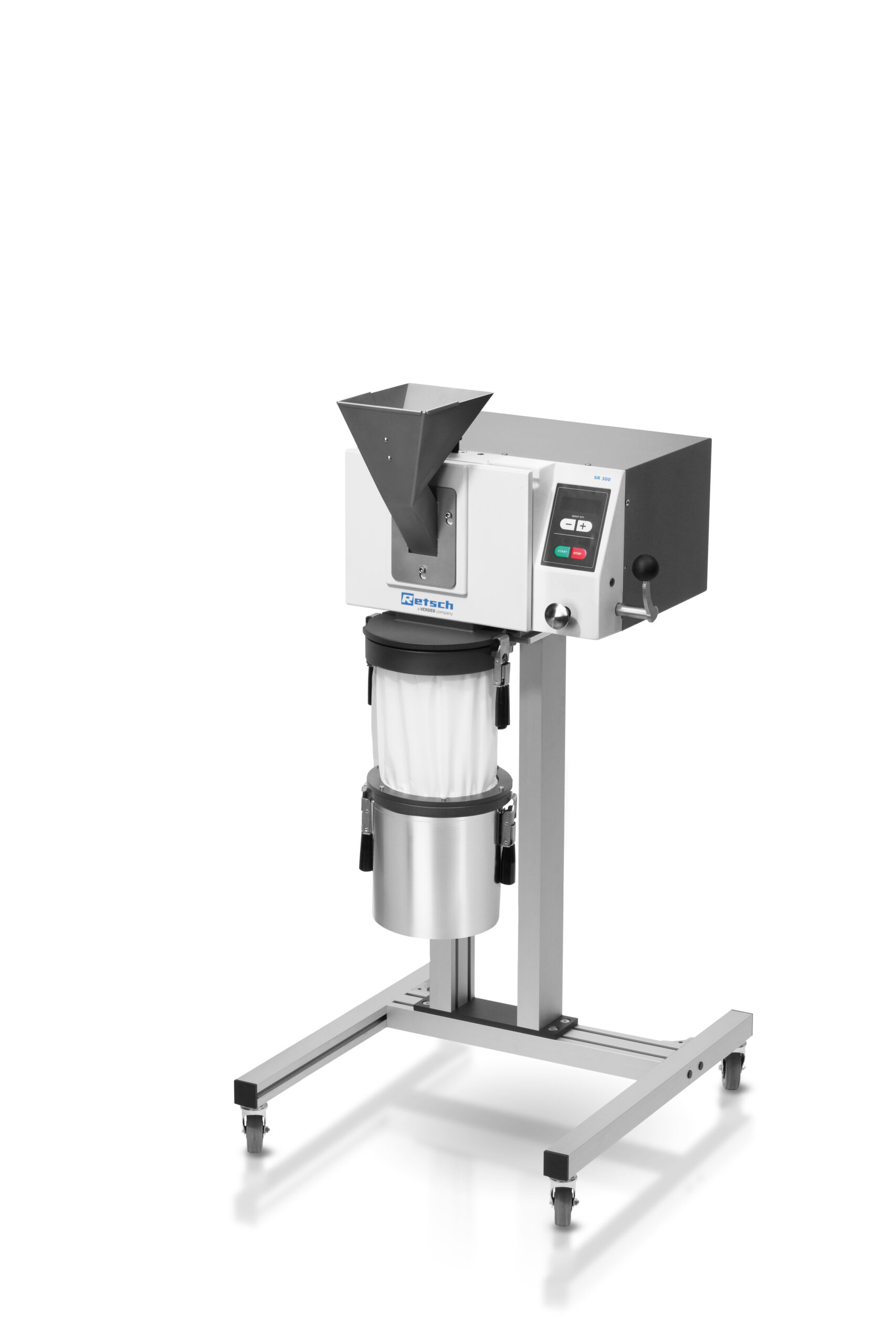

SR 300 INTRODUCTION
PRODUCT ADVANTAGES
- wide range of accessories including various feeding systems, rotors and sieves
- defined final fineness due to bottom sieves with aperture sizes from 0.08 – 10 mm
- optional grinding inserts 180° for grinding of hard-brittle materials by additional impact
- gravity outlet with 5l or 30 L collecting vessel for batchwise collection of larger sample quantities
- optionally available cyclone unit with 0.25 – 0.5 – 1 – 2 – 5 or 30 liters collecting vessel
- optional distance rotor to reduce frictional heat
- adjustable speed for different applications
- removable hopper for easy cleaning
- easy cleaning thanks to exchangeable push-fit grinding insert, rotor and cassette
- central locking device
- grinding chamber, feed hopper and material inlet and outlet made of stainless steel
- electric engine brake
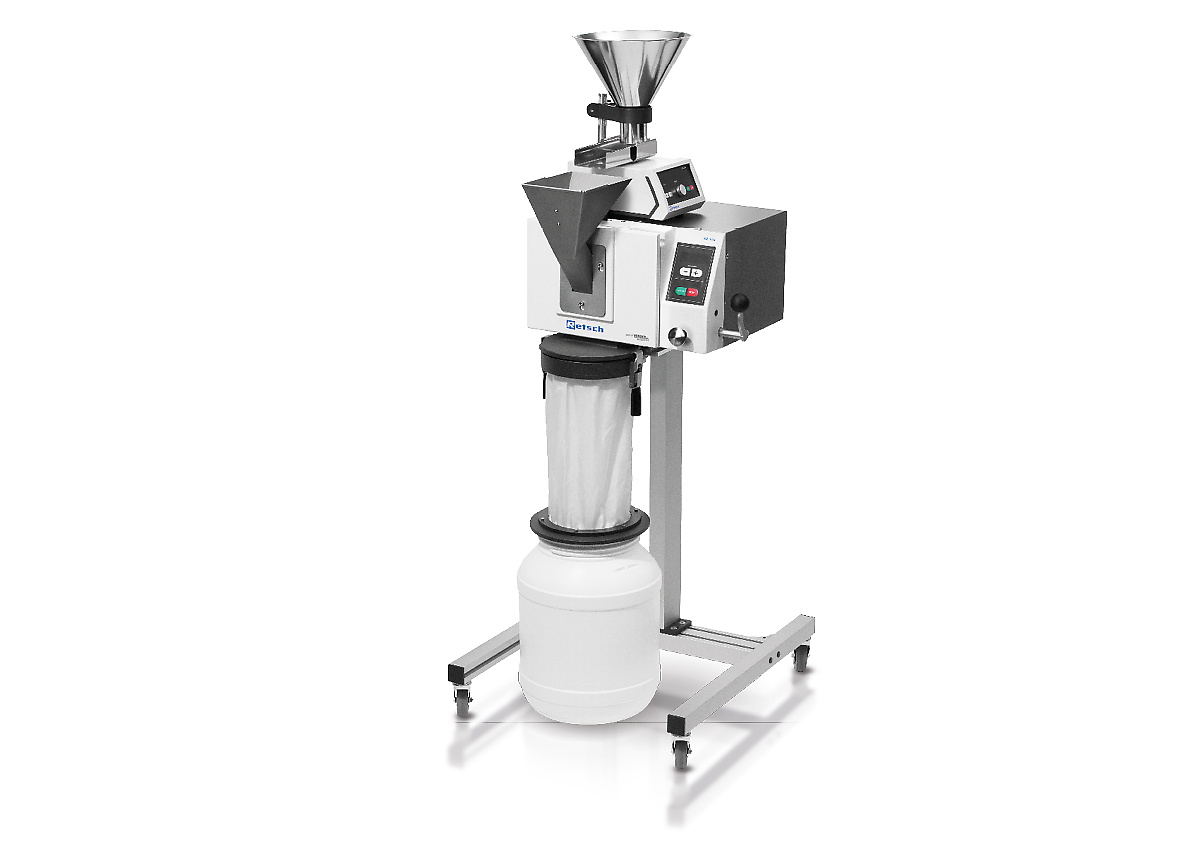
IDEAL FOR LIGHT AND HEAT SENSITIVE MATERIALS
In combination with the cyclone suction unit, the SR 300 Rotor Beater Mill is even suitable for grinding light and heat-sensitive materials.
- Efficient cooling of sample and grinding tools
- Improved sample discharge from the grinding chamber
- Particularly suitable for large volumes
- The cyclone accommodates sample bottles of 0.25, 5, and 30 liters
- Ideal for cryogenic grinding

TYPICAL SAMPLE MATERIALS
The SR 300 is suitable for grinding a wide variety of materials:
waste, graphite, collagen, drugs, fertilizers, feed pellets, grains, spices, rubber, wood, coffee beans, bones, coal, food, corn, minerals, paper, plant parts, polymers, powder coatings, rice, seeds, straw, sweets, tobacco, textiles, chemical products, electronic components, dried fruits and vegetables, dried larvae, pharmaceutical products.
Powder Coatings
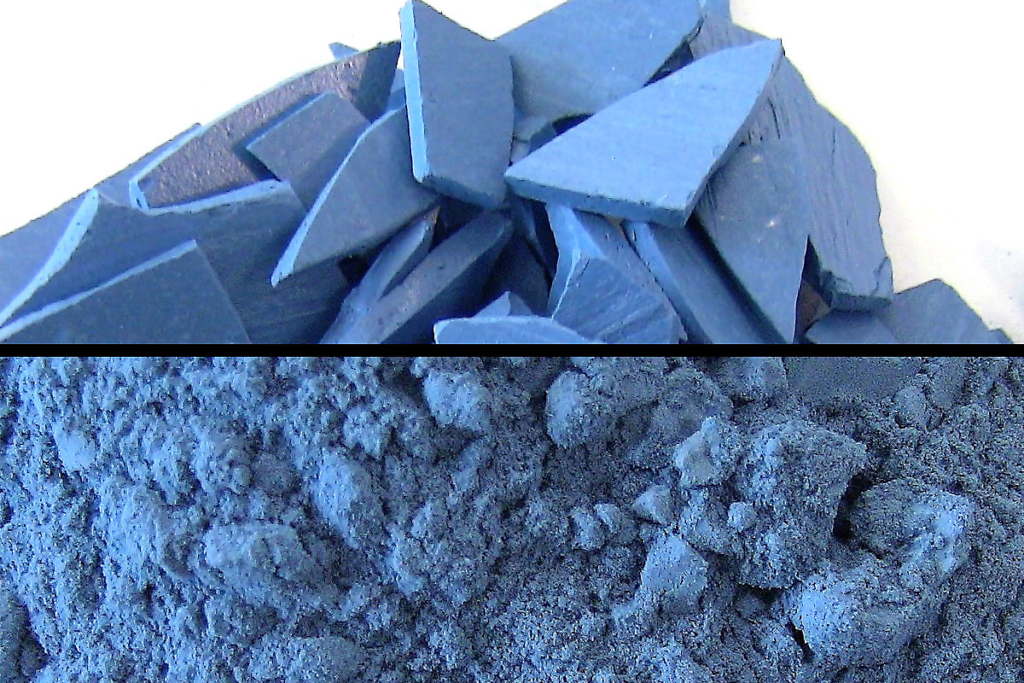
Coffee Beans

PET Flakes

Plant Materials

CRYOGENIC GRINDING
Cryogenic or cold grinding is the ideal solution for pulverizing samples that cannot be reduced to the required fineness at room temperature. This procedure involves the use of grinding aids such as liquid nitrogen (-196 °C, embrittlement of the sample outside the mill) or dry ice (-78 °C, sample/dry ice mixture) to embrittle the sample material by cooling, and thus improve the breaking behavior.
In addition, highly volatile components are better preserved in the sample by cooling. Cryogenic grinding is easy to perform with the SR 300 and is recommended especially for plastics or very temperature-sensitive samples.

FUNCTIONAL PRINCIPAL
Size reduction and deagglomeration in the SR 300 are achieved by impact and shear effects. The feed material passes from the hopper into the center of the grinding chamber where it is crushed between the rotor, sieve and grinding inserts. As soon as the material is smaller than the aperture size of the sieve it enters the collecting receptacle through the gravity outlet. The airborne fine fraction is separated off by a downstream filter system. The optionally available cyclone separator ensures a cooling of the sample material and the cutting tools and improves the discharge of the sample from the grinding chamber. The quick-acting door lock ensures easy access to the grinding chamber for quick cleaning. With their safety switch, splashback and access barrier in the inlet and outlet areas, Rotor Beater Mills offer the highest degree of operating safety.
COMPREHENSIVE SELECTION FOR YOUR INDIVIDUAL REQUIREMENTS
The wide range of accessories makes the SR 300 extremely versatile. The desired final fineness can be determined by selecting the ring sieve. Rule of thumb: After grinding, approximately 80% of the sample material is about half the size of the sieve aperture. You can choose between sieves with apertures ranging from 0.08 to 10 mm.
RING SIEVES
For the ZM 300 ring sieves with reinforced rim are used which are equipped with four grooves for secure locking. Distance sieves, also secured and fixed by four grooves, have a gap between the sieve mesh and the rotor, which reduces shearing effects and thereby heat generation.
COLLECTING VESSELS
In the standard collecting vessel with 900 ml nominal volume, up to 300 ml of sample can be ground in one working step. With the large-volume cassette, the useful volume can be doubled to 600 ml. When utilizing a cassette with cyclone, various collecting vessels up to 4,500 ml useful volume are available.
ROTORS
Rotors are available with either a standard rotor for most applications. There is also a distance rotor available for temperature sensitive materials.
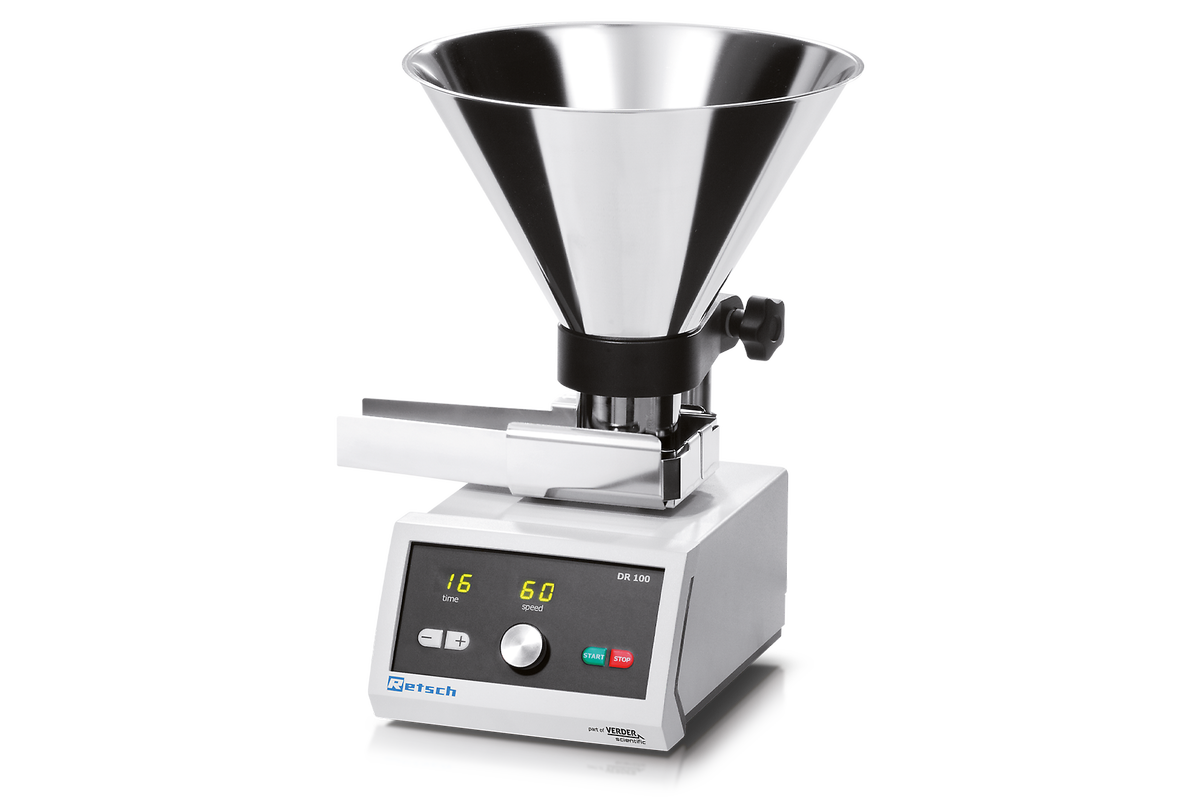
VIBRATORY FEEDER DR 100
The Vibratory Feeder DR 100 is controlled via an interface and conveys material in a load-dependent manner to the hopper of the SR 300. This procedure ensures uniform grinding with maximum sample feed. The use of a feeder is particularly advantageous for large sample quantities.
TECHNICAL DATA
| Applications | size reduction, deagglomeration |
| Field of application | agriculture, chemistry / plastics, construction materials, environment / recycling, food, geology / metallurgy, medicine / pharmaceuticals |
| Feed material | soft, medium-hard |
| Material feed size* | < 25 mm |
| Final fineness* | < 50 µm |
| Speed at 50 Hz (60 Hz) | 3,000 – 10,000 min-1 (in steps of 500 min-1) |
| Rotor peripheral speed | 22 ..72 m/s |
| Types of rotors | standard / distance |
| Material of grinding tools | rotor and sieves of stainless steel |
| Sieve sizes | trapezoid holes 0.08 / 0.12 / 0.20 / 0.25 / 0.35 / 0.50 / 0.75 / 1.00 / 1.25 / 1.50 / 2.00 mm round holes 3.00 / 4.00 / 10.00 mm |
| Hinged hopper | removeable hopper |
| Dust extraction unit | optional cyclone |
| Collector capacity | 5 l / optional: 30 l |
| Drive | 3-phase motor |
| Electrical supply data | 200-240 V, 50/60 Hz |
| Power connection | 1-phase |
| Engine brake | yes, electric |
| Protection code | IP 41 |
| Power consumption | 2.5 kW |
| W x H x D closed | 600 x 1200 x 700 mm (with base frame) |
| Net weight | ~ 60 kg (with base frame) |
| Standards | CE |
*depending on feed material and instrument configuration/settings


