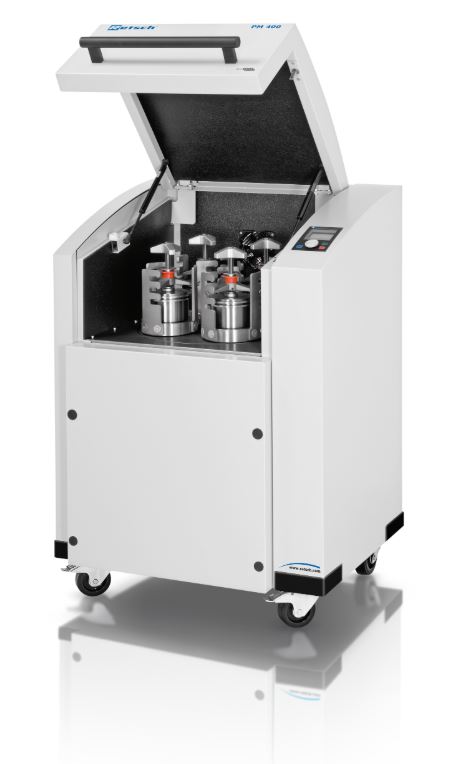

THE HIGH-VOLUME BALL MILL FOR HIGH-THROUGHPUT APPLICATIONS
- Max. speed 400 rpm, large sun wheel
- Up to 10 mm feed size and 0.1 µm final fineness
- 4 grinding stations for jars from 12 ml up to 500 ml, jars of 12 – 80 ml can be stacked (two jars each)
- GrindControl to measure temperature and pressure inside the jar.
- Aeriation lids to control the atmosphere inside the jar
- Floor model, storable SOPs and cycle programs, 5 different jar materials for dry and wet grinding
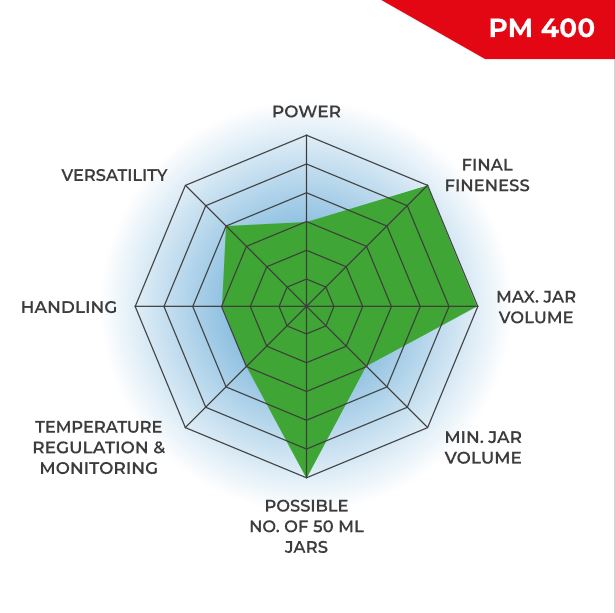
Fast & Powerful
- Loss-free size reduction down to the submicron range
- Wet grinding yields particle sizes in the nanometer range (<100 nm)
- Variable speed from 30 to 400 rpm,
speed ratio 1:-2 | 1:-2.5 | 1:-3 - Batch-wise processing with max. 4 x 220 ml
- 8 x 20 ml sample per batch with stacked jars
- Wide range of materials for contamination free grinding
REPRODUCIBILITY, SAFETY, AND EASY HANDLING
- Reproducible results due to speed control
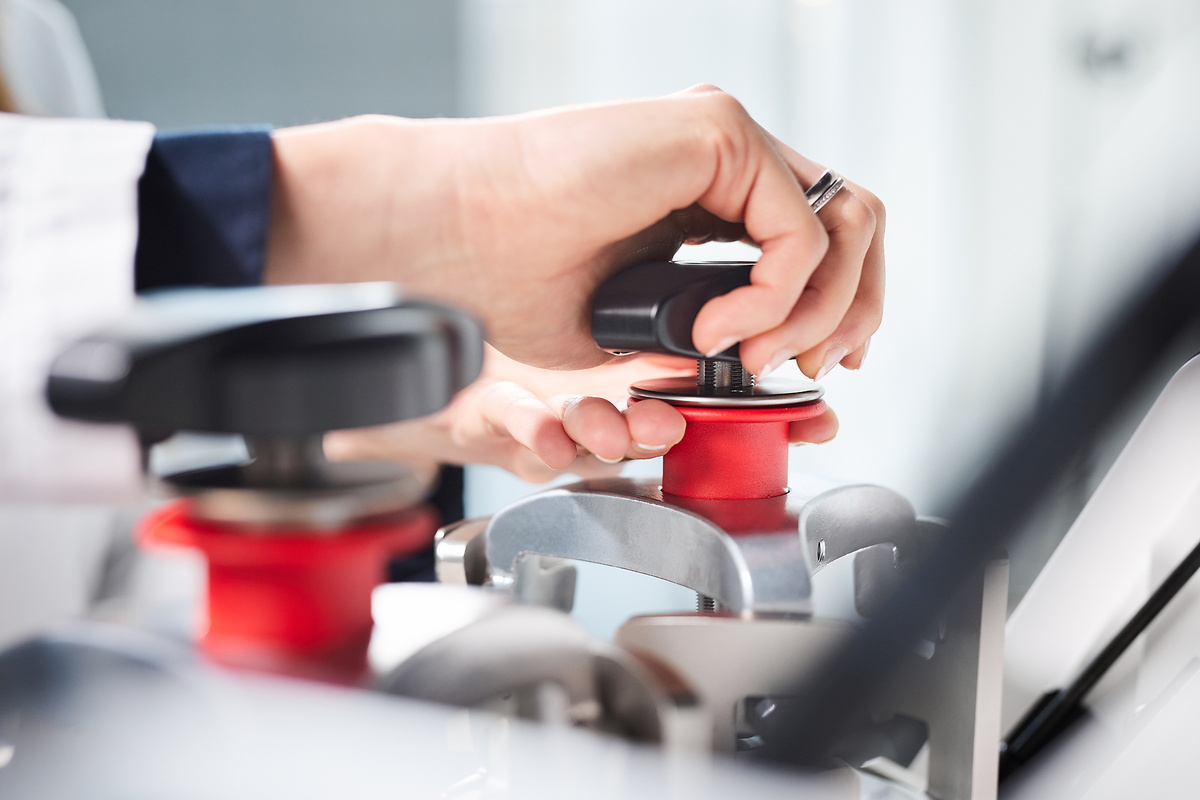
- Easy and safe clamping of grinding jars
- The Safety Slider prevents starting the machine without securely clamped jars
- Innovative counterweight and imbalance sensor for unsupervised operation
- Comfortable parameter setting via display and ergonomic 1-button operation
- Automatic grinding chamber ventilation
- 10 SOPs can be stored, programmable starting time
- Power failure backup ensures storage of remaining processing time
SETTINGS AND OPTIONS
- Dry and wet grinding possible
- Suitable for long-term trials, 99 h max.
- Interval operation allows for cooling breaks
- Direction reversal helps to minimize caking effects
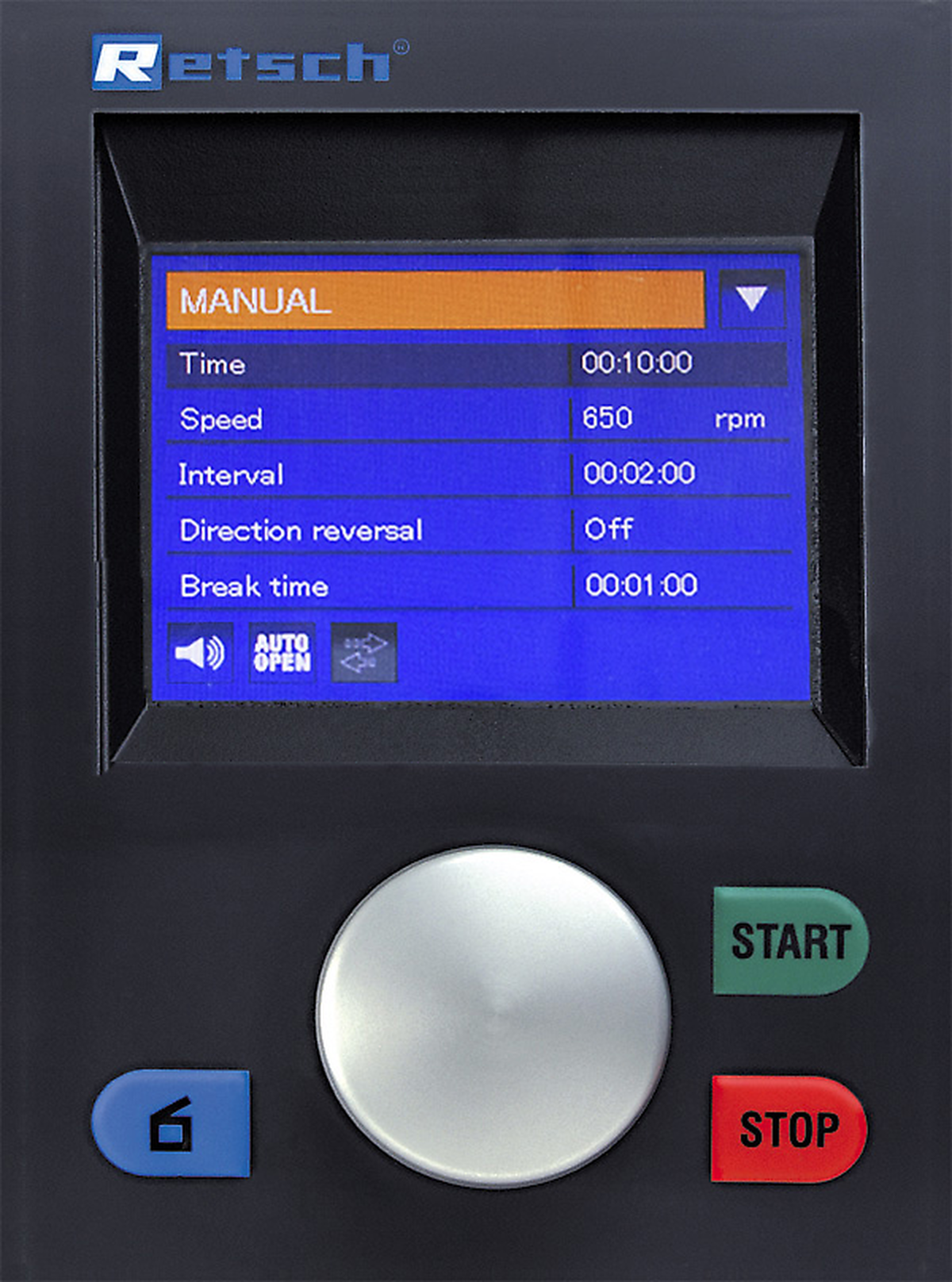
REPRODUCIBILITY
- Reproducible results due to speed control
- Indication of load-defined speed, independent of set speed
- 12 SOPs and 4 cycle programs can be stored
- Power failure backup ensures storage of remaining processing time
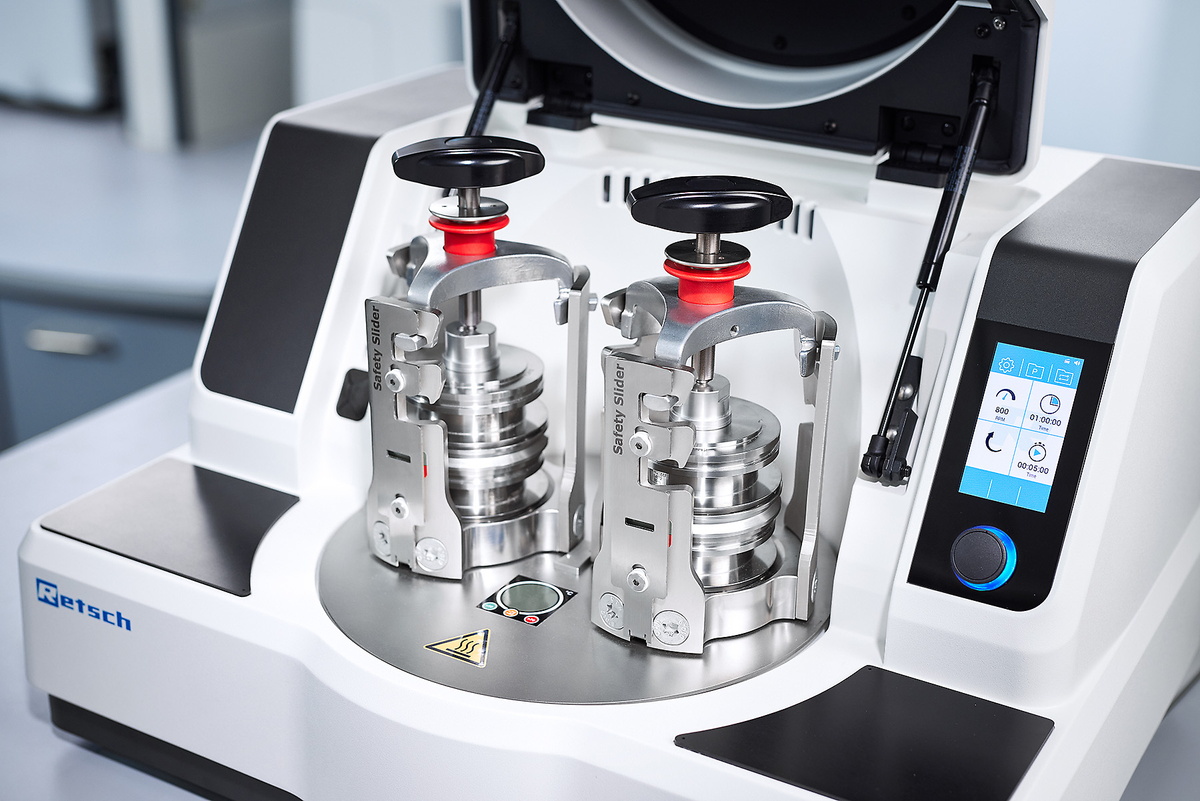
SAFETY FIRST: JAR CLAMPING
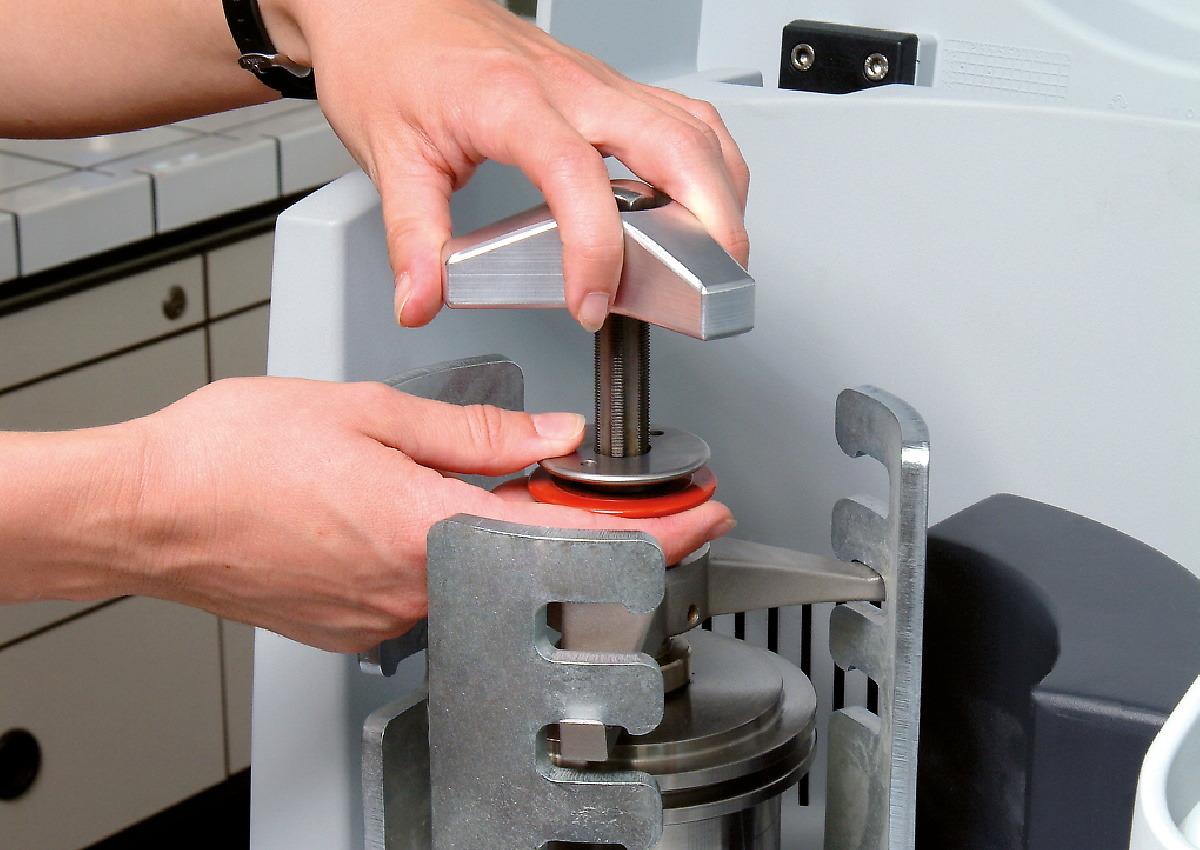
Operation of the RETSCH planetary ball mills is particularly safe. They feature a robust Safety Slider which ensures that the mill can only be started after the grinding jar has been securely fixed with a clamping device. The self-acting lock ensures that the jar is seated correctly and securely. This proven solid mechanical system is less failure-prone than electronic solutions – the user has full access to the sample at any time. When the electronic system fails, it is not possible to unlock the jars, for example.
WET AND NANO-SCALE GRINDING WITH THE PM 400
Wet grinding is used to obtain particle sizes below 5 µm, as small particles tend to get charged on their surfaces and agglomerate, which makes further grinding in dry mode difficult. By adding a liquid or dispersant the particles can be kept separated.
To produce very fine particles of 100 nm or less (nano-scale grinding) by wet grinding, friction rather than impact is required. This is achieved by using a large number of small grinding balls which have a large surface and many friction points. The ideal filling level of the jar should consist of 60 % small grinding balls.
For more details on jar filling, wet grinding and sample recovery watch the video.
The graphic shows the result of grinding glass at 360 rpm in the PM 400. After 1 h of pulverization in ethanol with 1 mm grinding balls, the D90 value of the original sample was reduced from 13 µm to 1.6 µm.

PM 400 MA FOR MECHANOCHEMICAL APPLICATIONS
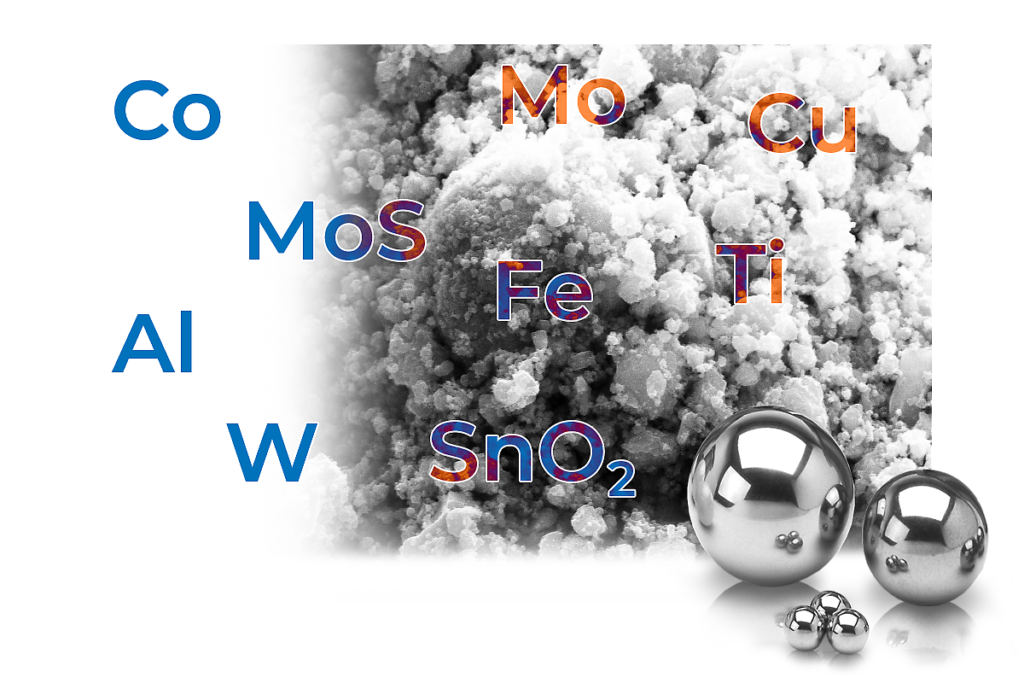
RETSCH Planetary Ball Mills are perfectly suited for processes like mechanical alloying or mechanosynthesis. For most reactions, the 1:-2 speed ratio of jar to sun wheel of the models PM 100 and PM 200 is fully adequate, as the ball charge produces enough impact energy. However, greater energy is required for some reactions. Here the PM 400 MA can be used with the increased speed ratio of 1:-2.5 or 1:-3.
The PM 400 MA with an increased speed ratio of 1:-2.5 or 1:-3.0 is designed specifically for these applications. The optimum speed ratio and all other grinding parameters need be determined by trial and error for a specific product.
EASYFIT GRINDING JARS FOR EXCELLENT RESULTS
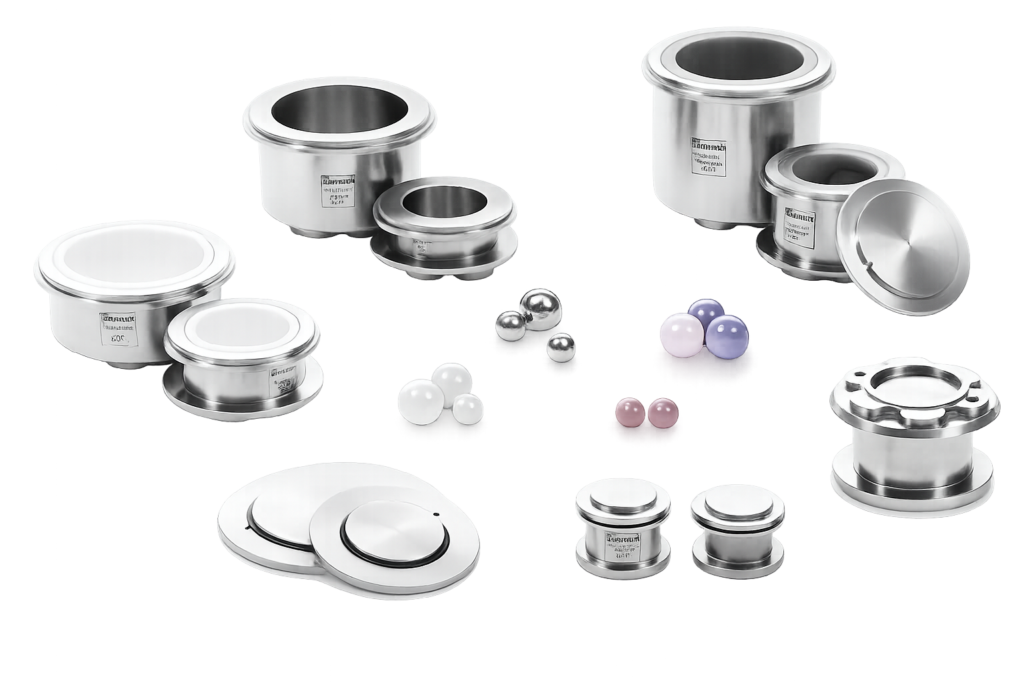
The performance and the result of sample preparation are also determined by the choice of the grinding jar and its ball charge. The EasyFit range of jars has been specially designed for extreme working conditions such as long-term trials, even at maximum speed of 800 rpm, wet grinding, high mechanical loads and maximum speeds as well as for mechanical alloying. This line of jars is suitable for all RETSCH planetary ball mills.
The new EasyFit grinding jar series features a structure on the bottom of the 50-500 ml jars called Advanced Anti-Twist (AAT). This ensures that the jars are tightly fixed without the risk of twisting, even at high speed, and that wear and tear is drastically reduced. Secure clamping of the jars is made much easier: to find the correct clamping position, a maximum twist of 60° is required.
The geometry of the EasyFit jars in the 50 ml and 250 ml sizes has been enlarged in diameter and reduced in height compared to the previous “comfort” models. This offers two advantages: better grinding results and interchangeable lids, as there are only three diameter dimensions for the entire grinding jar range.
Diameter categories
- Diameter 1: 12 ml and 25 ml grinding jars
- Diameter 2: 50 ml, 80 ml and 125 ml grinding jars
- Diameter 3: 250 ml and 500 ml grinding jars
- Available jar sizes: 12 ml / 25 ml / 50 ml / 80 ml / 125 ml / 250 ml / 500 ml
- Innovative Advanced Anti-Twist (AAT) function ensures secure fit of grinding jars
- High flexibility thanks to suitability of three lid sizes for all seven jar sizes
- Pressure-tight and dust-proof O-ring sealing prevents material spillage
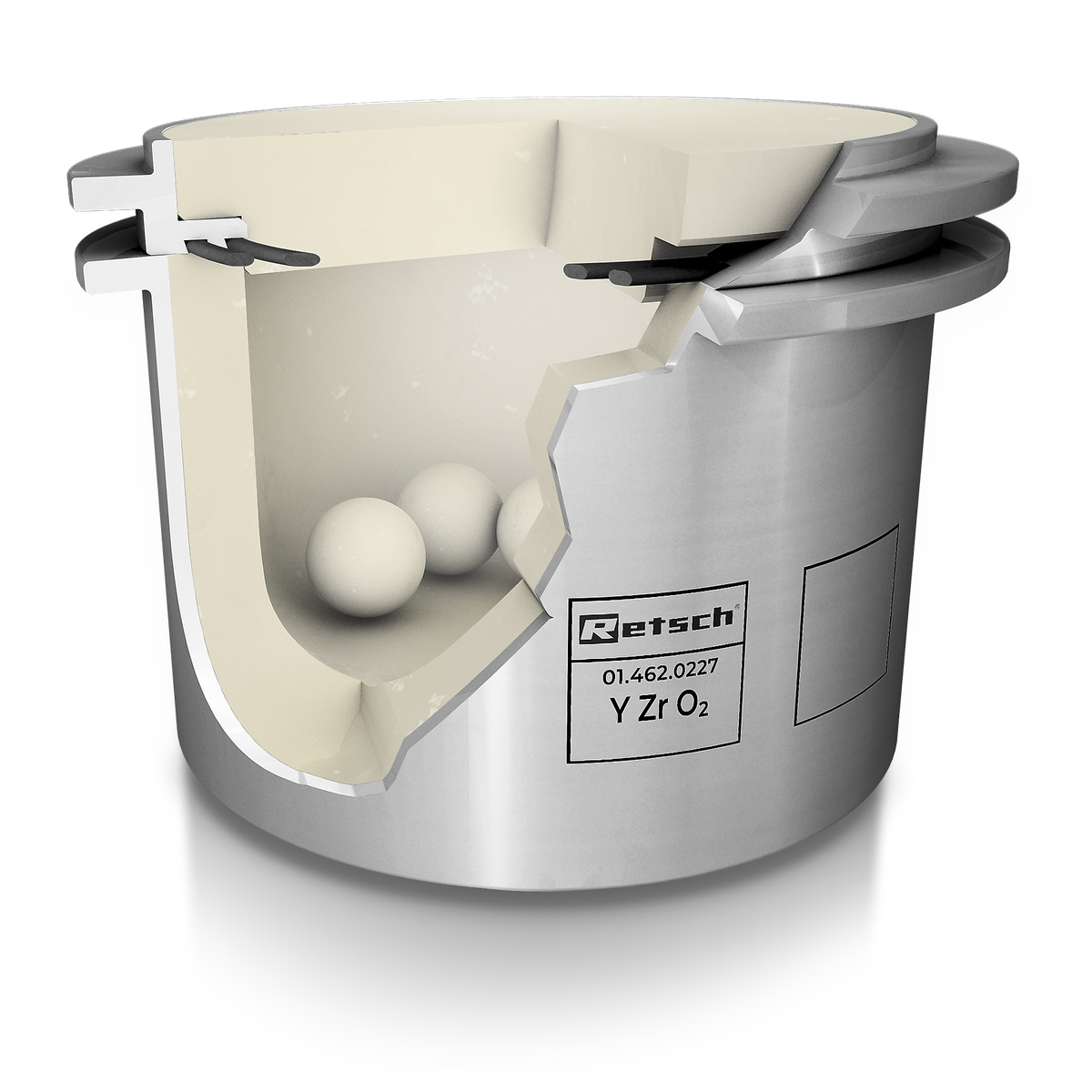
- Jars and balls available in 5 materials: hardened stainless steel, tungsten carbide, agate, sintered aluminium oxide, zirconium oxide
- Stainless steel protective jacket for agate, sintered aluminum oxide, zirconium oxide and tungsten carbide grinding jars
- A groove between jar body and lid allows for easy opening of the lid, e. g. with the help of a spatula, if there are underpressure effects inside the jar
JARS & LIDS FOR SPECIAL APPLICATIONS
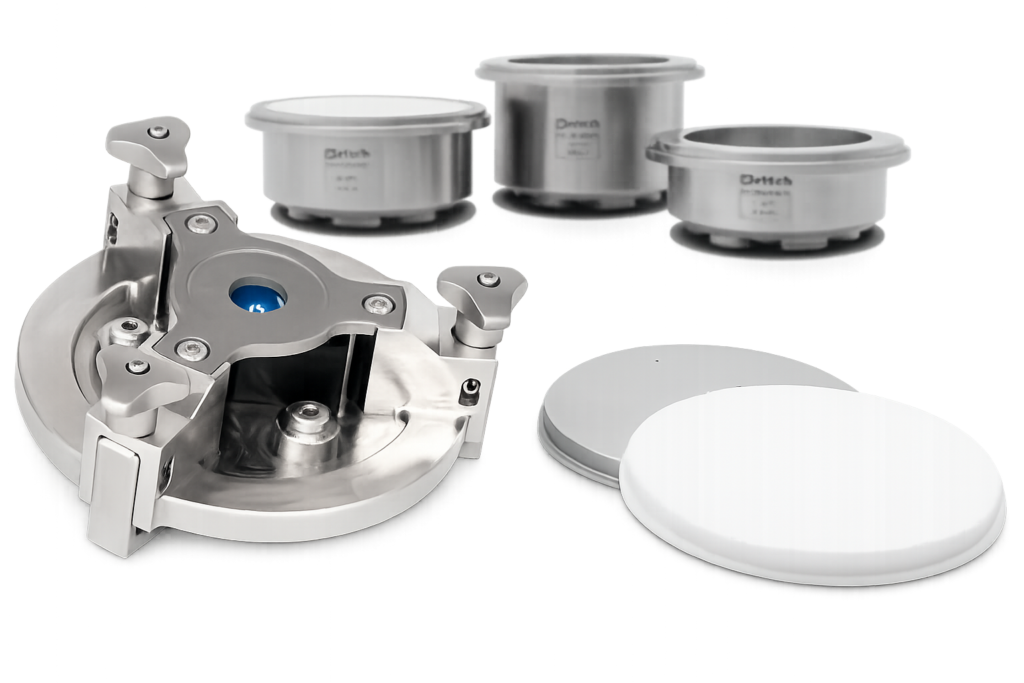
- For colloidal or wet grinding, the use of a grinding jar with a special closure device is recommended
- The special closure device is designed for ergonomic handling
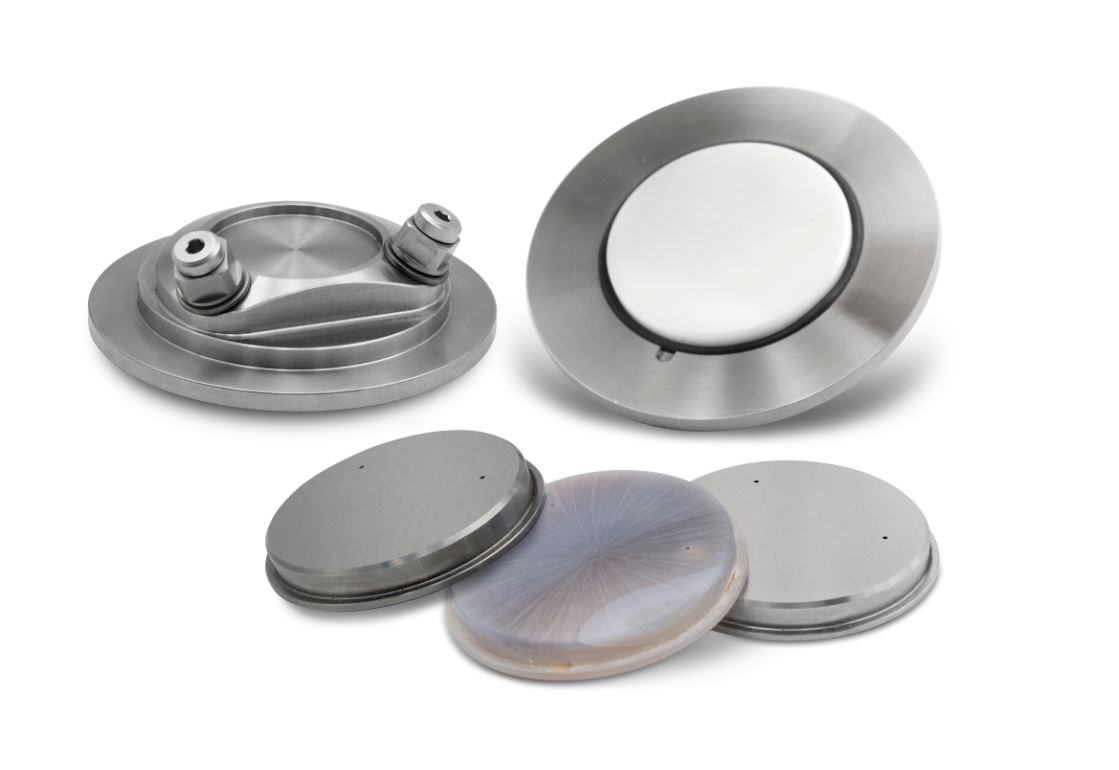
- Aeration lids are designed for working under inert atmosphere, for example if oxygen can influence the grinding process or the mechanosynthesis. The lids allow the introduction of gases like argon or nitrogen into the grinding jar.
- Optional pressure and temperature measuring system PM GrindControl
Both the aeration lid and GrindControl can now be equipped with inlays of different materials. Thus, the lid can be used for, e. g. a steel and a zirconium oxide jar by simply exchanging the inlay.
ADAPTERS FOR SPECIAL APPLICATIONS
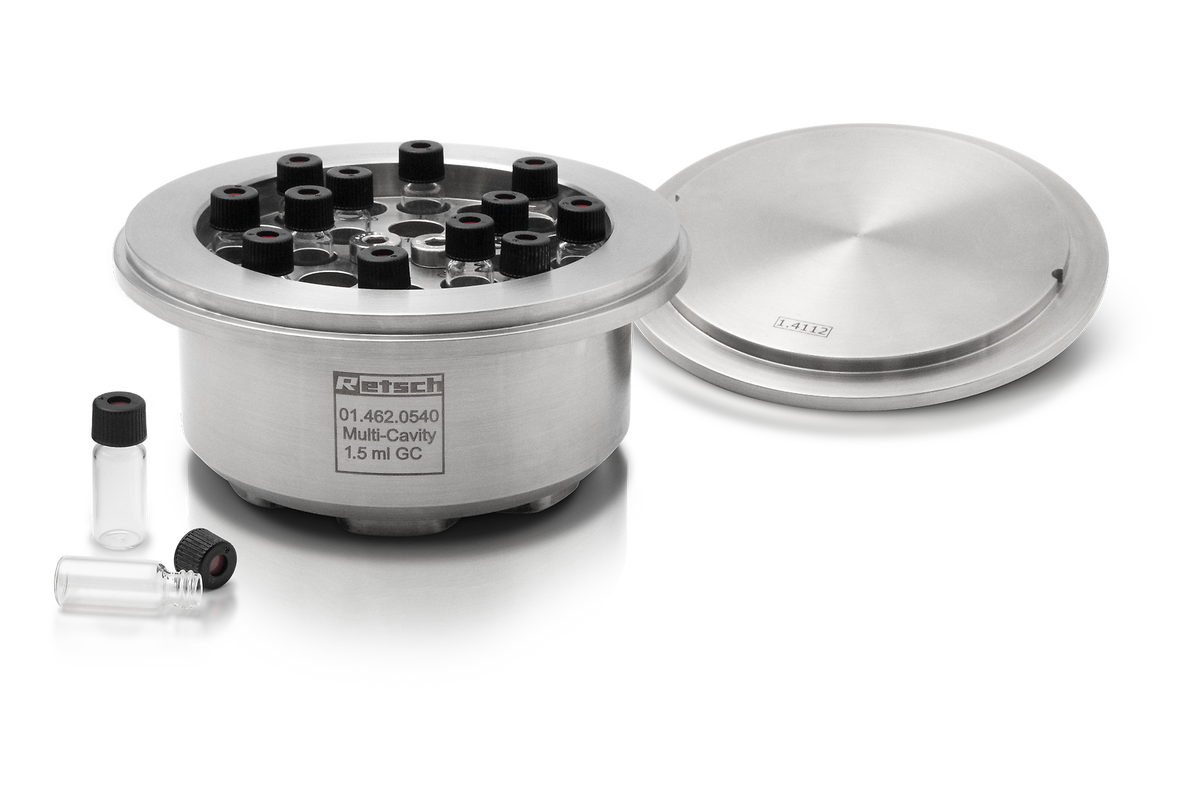
With a special adapter, co-crystal screening can be carried out in a planetary ball mill, using disposable vials such as 1.5 ml GC glass vials. The adapter features 24 positions arranged in an outer ring with 16 positions and an inner ring with 8 positions. The outer ring accepts up to 16 vials, allowing for screening up to 64 samples simultaneously when using the Planetary Ball Mill PM 400. The 8 positions of the inner ring are suitable to perform trials with different energy input, e.g. for mechanosynthesis research.

RECOMMENDED JAR FILLINGS
To produce optimum grinding results, the jar size should be adapted to the sample amount to be processed. The grinding balls are ideally sized 3 times bigger than the largest sample piece. Following this rule of thumb, the number of grinding balls for each ball size and jar volume is indicated in the table below. To pulverize, for example, 200 ml of a sample consisting of 7 mm particles, a 500 ml jar and grinding balls sized at least 20 mm or larger are recommended. According to the table, 25 grinding balls are required.

The table shows the recommended charges (in pieces) of differently sized grinding balls in relation to the grinding jar volume, sample amount and maximum feed size.
TYPICAL SAMPLE MATERIALS
RETSCH planetary ball mills are perfectly suitable for size reduction of, for example, alloys, bentonite, bones, carbon fibres, catalysts, cellulose, cement clinker, ceramics, charcoal, chemical products, clay minerals, coal, coke, compost, concrete, electronic scrap, fibres, glass, gypsum, hair, hydroxyapatite, iron ore, kaolin, limestone, metal oxides, minerals, ores, paints and lacquers, paper, pigments, plant materials, polymers, quartz, seeds, semi-precious stones, sewage sludge, slag, soils, tissue, tobacco, waste samples, wood, etc.



FUNCTIONAL PRINCIPAL
The grinding jars are arranged eccentrically on the sun wheel of the planetary ball mill. The direction of movement of the sun wheel is opposite to that of the grinding jars in the ratio 1:-2 (or 1:-2.5 or 1:-3).
The grinding balls in the grinding jars are subjected to superimposed rotational movements, the so-called Coriolis forces. The difference in speeds between the balls and grinding jars produces an interaction between frictional and impact forces, which releases high dynamic energies.
The interplay between these forces produces the high and very effective degree of size reduction of the planetary ball mill.
TECHNICAL DATA
| Applications | pulverizing, mixing, homogenizing, colloidal milling, mechanical alloying, mechanosynthesis, nano grinding, co-crystal screening |
| Field of application | agriculture, biology, chemistry, construction materials, engineering / electronics, environment / recycling, geology / metallurgy, glass / ceramics, medicine / pharmaceuticals |
| Feed material | soft, hard, brittle, fibrous – dry or wet |
| Size reduction principle | impact, friction |
| Material feed size* | < 10 mm |
| Final fineness* | < 1 µm, for colloidal grinding < 0.1 µm |
| Batch size / feed quantity* | max. 4 x 220 ml, max. 8 x 20ml with stacked grinding jars |
| No. of grinding stations | 4 / 2 |
| Speed ratio | 1:-2 / 1:-2.5 / 1:-3 |
| Sun wheel speed | 30 – 400 min-1 |
| Effective sun wheel diameter | 300 mm |
| G-force | 26.8 g |
| Type of grinding jars | EasyFit, optional areation covers, safety closure devices |
| Material of grinding tools | hardened steel, stainless steel, tungsten carbide, agate, sintered aluminum oxide, silicon nitride, zirconium oxide |
| Grinding jar sizes | 12 ml / 25 ml / 50 ml / 80 ml / 125 ml / 250 ml / 500 ml |
| Stackable grinding jars | 12 ml / 25 ml / 50 ml / 80 ml |
| Adapter for single-use glas vials | 24 x 1.5 ml / 7 x 20 ml |
| Setting of grinding time | digital, 00:00:01 to 99:59:59 |
| Interval operation | yes, with direction reversal |
| Interval time | 00:00:01 to 99:59:59 |
| Pause time | 00:00:01 to 99:59:59 |
| Storable SOPs | 10 |
| Measurement of input energy possible | yes |
| Interface | RS 232 / RS 485 |
| Drive | 3-phase asynchronous motor with frequency converter |
| Drive power | 1.5 kW |
| Electrical supply data | different voltages |
| Power connection | 1-phase |
| Protection code | IP 30 |
| Power consumption | ~ 2200 W (VA) |
| W x H x D closed | 836 x 1220 (1900) x 780 mm |
| Net weight | ~ 290 kg |
| Standards | CE |
| Patent / Utility patent | SafetySlider (DE 202008008473) |
*depending on feed material and instrument configuration/settings